

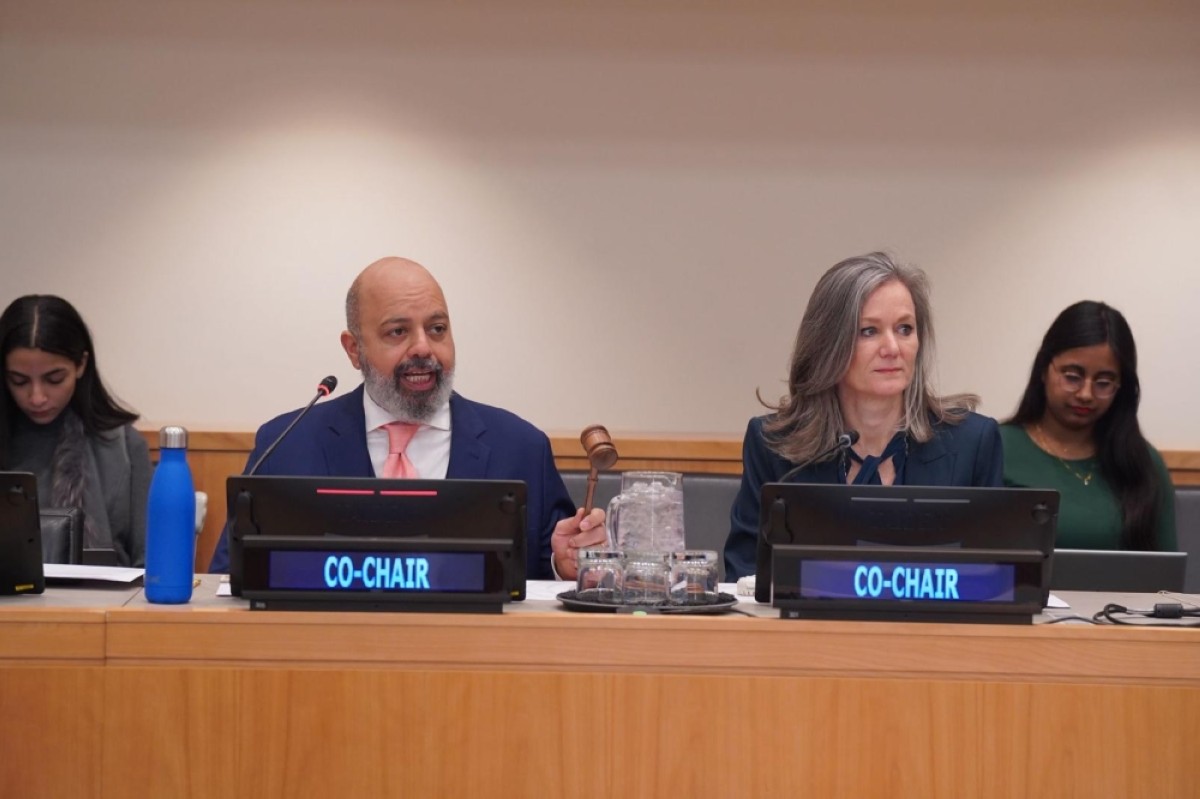
NEW YORK: Kuwait’s permanent representative to the United Nations, Ambassador Tareq Al-Bannai, has called for a “constructive and forward-looking” approach to international negotiations on reforming the UN Security Council. Al-Bannai made the remarks after chairing the opening session of the international negotiations alongside the Netherlands’ permanent representative, Ambassador Lise Gregoire-van Haaren. The session focused on in-depth discussions across five main reform tracks and saw active participation from a wide range of member states. “The session reflects clear and ongoing interest in advancing these discussions,” Al-Bannai said. He urged delegations to give particular attention to regional representation, including Latin America and the Caribbean, the Asia-Pacific region, and cross-regional groups such as the Arab Group.
Al-Bannai has chaired the Intergovernmental Negotiations on Security Council reform since 2023, a role that has given him firsthand insight into the challenges of updating the council’s structure and working methods. He has repeatedly highlighted the frustration in the Arab world over the council’s inability to address crises in the region, particularly in Gaza. “We see resolutions passed, but not implemented—especially in our region. So, of course, there’s frustration and despair,” he said in a previous interview.
He said the current council, structured in the aftermath of World War II, no longer reflects today’s geopolitical realities. “1945 is not 2025,” he said, noting that reform discussions must account for shifts in global influence, as well as principles of fairness and inclusivity.
The January session also saw participation from all five permanent members of the Security Council, which Al-Bannai described as a “pivotal development” for moving the reform process forward. Meanwhile, Sierra Leone, speaking on behalf of the African Group, said the bloc intends to present its proposed model for Security Council reform to member states during the current session, following the precedent set by other regional groups.
Al-Bannai has previously emphasized that any expansion of the council must balance broader representation with effectiveness and transparency, including considerations of regional fairness, adherence to the UN Charter, and contributions to international law and humanitarian efforts. — Agencies
