

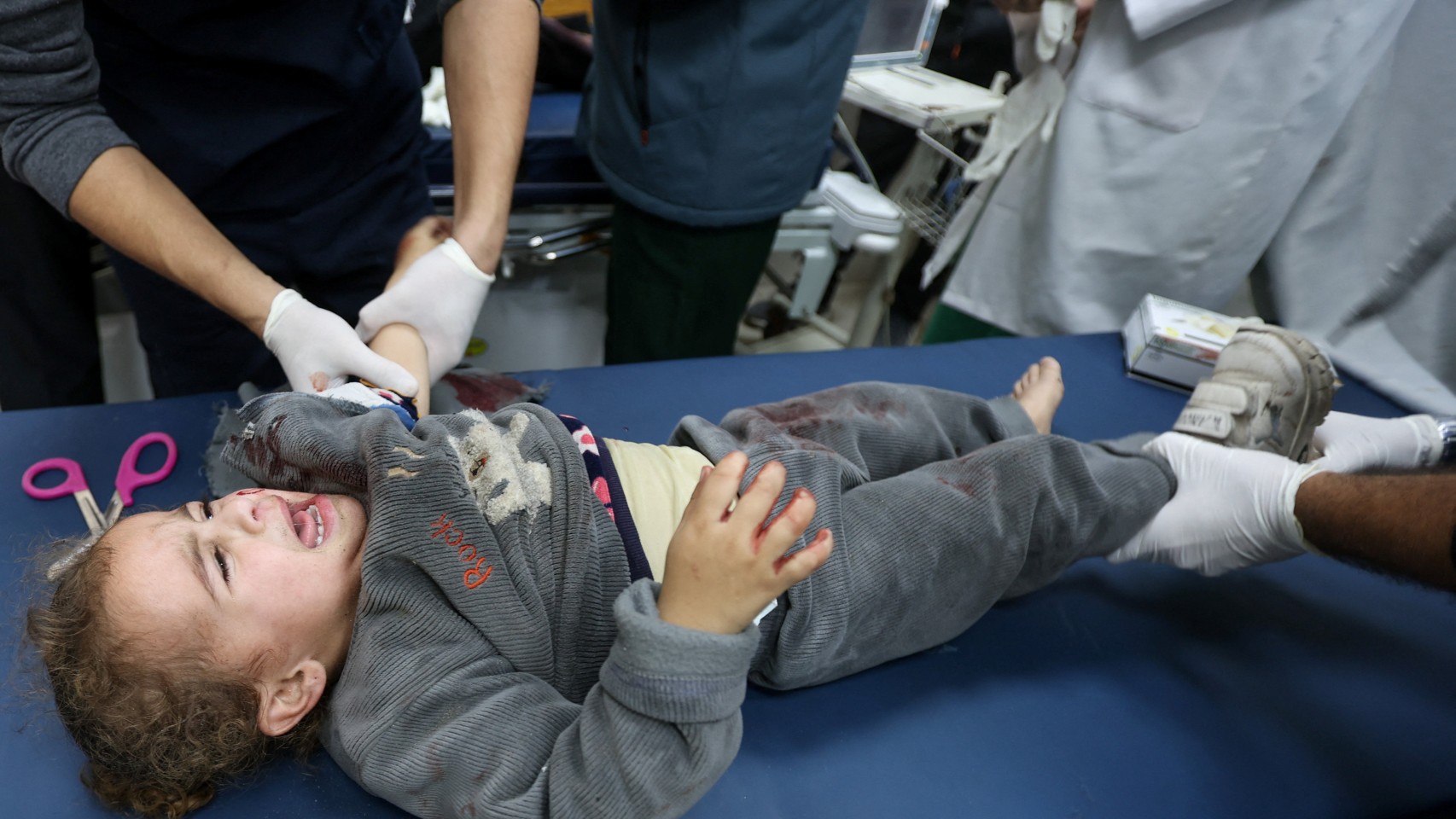
On 3 January, the World Health Organization (WHO) director-general said that only 5,383 patients had been evacuated with WHO support since October 2023, of whom just 436 were evacuated after Israel destroyed and closed the Rafah crossing in May 2024.
He noted that “patients in Gaza need urgent medical evacuation for life-saving treatment, yet the pace of evacuations remains excruciatingly slow”, adding that more than 12,000 people still require medical evacuation and that, at the current rate, it would take between five and 10 years to evacuate all critically ill patients.
These figures have been consistently reported.
Shortly afterwards, the UN Office for the Coordination of Humanitarian Affairs (Ocha) reported that, as of 6 January 2026, more than 18,500 critical patients – including 4,000 children – are in need of medical evacuation abroad.
But between 1 January 2025 and 5 January 2026, a period of almost a year, only 2,736 patients were evacuated outside Gaza.
New MEE newsletter: Jerusalem Dispatch
Sign up to get the latest insights and analysis on
Israel-Palestine, alongside Turkey Unpacked and other MEE newsletters
To understand the scale of the crisis, current evacuation figures must be assessed against the pre-genocide period. Before October 2023, an average of 2,000 patients were referred monthly outside the Gaza Strip for treatments unavailable locally, most of them to hospitals in the West Bank and East Jerusalem.
Even then, due to Israel’s siege policy, Gaza lacked sufficient expertise and essential medical supplies across several specialties, including oncology and paediatric care.
So what happens when, on top of these pre-existing challenges, Israel’s bombardment produces tens of thousands of injured people, accumulating to nearly 170,000 injured and wounded, while hospitals are simultaneously and systematically destroyed, one after another, along with the capacity to deliver care?
What does it mean to keep appealing within this framework, when the mechanism it relies on belongs to a pre-genocide, politicised permit regime? And what possibilities remain today for chronically and critically ill patients and the injured?
Permit regime
Although the permit system was effectively suspended following the destruction and closure of the Erez crossing, its underlying logic remains intact.
Low evacuation numbers are attributed to Israeli denials or delays, including for critically injured and ill children, producing an ever-growing waiting list with thousands of cases pending for months
Medical evacuation continues to operate similarly.
Even to cross through the Egyptian-controlled Rafah crossing, patients still require Israeli “security clearance” and Israeli approval. This is in addition to coordination with receiving countries and the extensive documentation required for submitting requests to the Coordinator of Government Activities in the Territories (Cogat).
As of January 2024, an estimated 350,000 people in the Gaza Strip were living with chronic illnesses, including approximately 52,000 people with diabetes, 45,000 with asthma, 45,000 with cardiovascular disease, 1,100 dialysis patients, and around 225,000 with hypertension.
Oncology patients constituted the largest group in need, owing to the absence of radiotherapy and severe shortages in diagnostic capacity. This crisis deepened when Israeli forces blew up and destroyed the Turkish-Palestinian Friendship Hospital, Gaza’s only specialised cancer treatment hospital, affecting roughly 1,500 patients.
Dialysis services have also been severely disrupted by fuel shortages, hospital raids, and restrictions on access to northern Gaza, where these services remain only partially available. By July 2025, around 400 kidney patients were reported to have died as a result of these ongoing restrictions.
As of November 2025, only 18 of 36 hospitals across Gaza were functional, and all were only partially operational. Several facilities, including Al-Awda and the Indonesian hospitals, are located beyond the “Yellow Line” – an area comprising roughly 50 percent of Gaza’s land and remaining under Israeli control – making access to them highly restricted.
Thus, what remains is not a functioning healthcare system but fragmented facilities operating, at best, partially, struggling to survive the severe damage inflicted on them. This devastation has been compounded by the continued blocking of humanitarian aid even after the ceasefire in October last year, as well as by permanent shortages of fuel, medicines and equipment.
Despite this collapse, the medical evacuation mechanism continues to be treated administratively as though Gaza’s healthcare system were still operating as before.
Follow Middle East Eye’s live coverage of Israel’s genocide in Gaza
Low evacuation numbers are attributed to Israeli denials or delays, including for critically injured and ill children, producing an ever-growing waiting list with thousands of cases pending for months. Under these conditions, Gaza’s referral system cannot submit additional requests at scale.
But it is crucial to highlight that these figures do not reflect the real scale of need. The number of people requiring treatment unavailable in Gaza is far higher, yet many are never referred in the first place.
System collapse
The health system is still expected to diagnose patients, document cases, submit referrals, and coordinate with stakeholders and receiving countries, despite the destruction of its material capacity. As a result, many people never make it onto the waiting list at all and die before being registered. Others have died while waiting.
With the closure of the Rafah crossing, the number of people evacuated has decreased even further.
A central problem in current humanitarian reporting on medical evacuations is that it often treats them as though they remain a viable referral pathway, implicitly projecting a pre-October 2023 governance model onto a context in which the material and institutional foundations of that model have been destroyed.
The mechanism through which patients are evacuated today is essentially the same permit- and referral-based regime that existed prior to the genocide and continues to be treated administratively as if Gaza’s health system still resembles its pre-genocide functionality.
However, mass injury, the destruction and forced evacuation of hospitals, the collapse of diagnostics, the death and displacement of healthcare workers, and the fragmentation of administration have profoundly undermined the ability of patients to even enter the referral system.
The result is a model of medical evacuation that regulates survival through paperwork and approvals, while most remain trapped inside a destroyed health system.
This should be understood not as an operational failure, but as part of a broader war on survival, one that preserves the appearance of humanitarian access while structurally disabling it, converting treatable illness and survivable injury into preventable death and long-term disability.
The views expressed in this article belong to the author and do not necessarily reflect the editorial position of Middle East Eye.
