

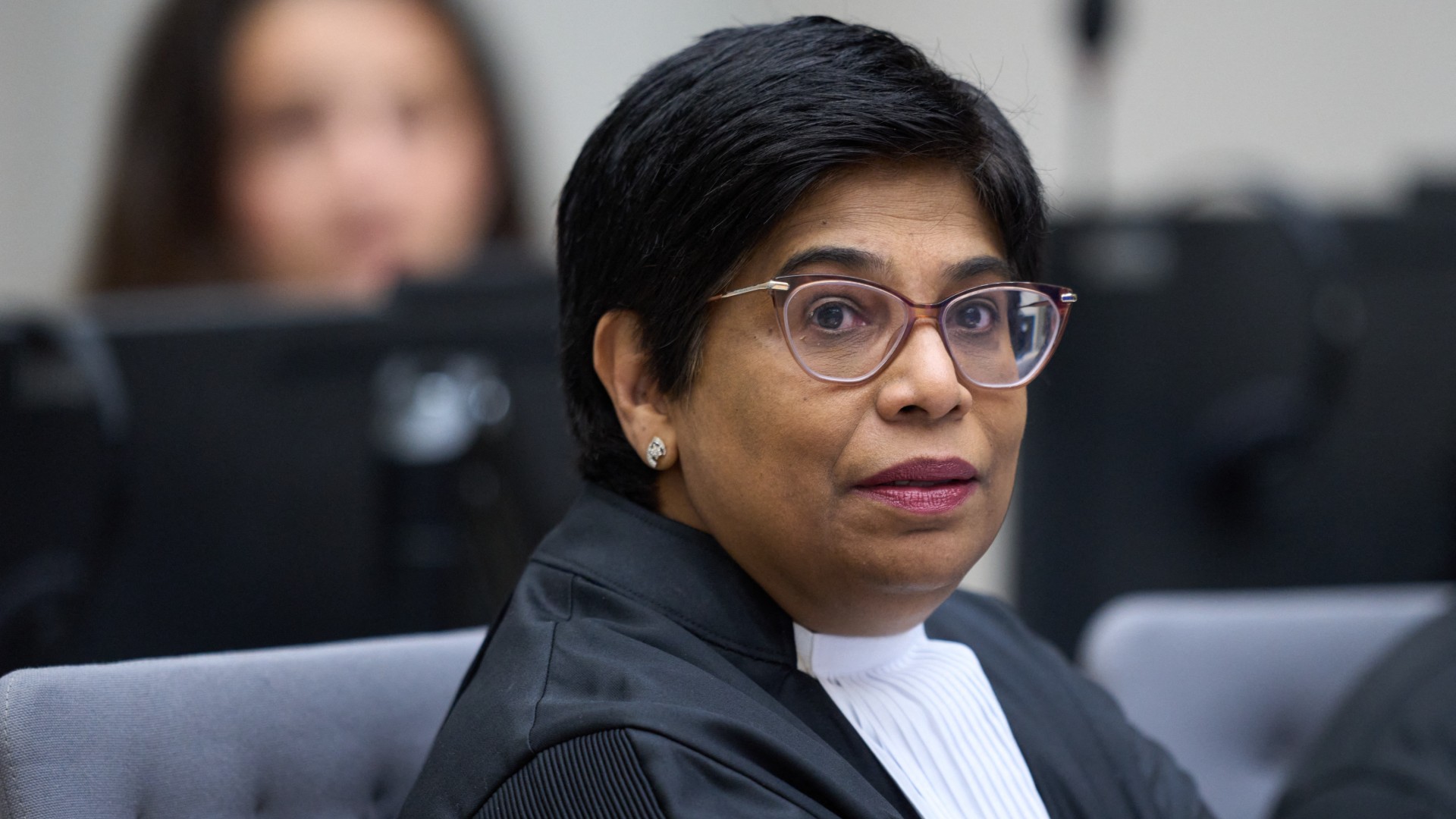
The Rapid Support Forces (RSF) paramilitary group has overseen “an organised, calculated campaign” of atrocities during the capture of Sudan’s el-Fasher in October, the deputy prosecutor of the International Criminal Court (ICC) said on Monday.
Addressing the United Nations Security Council virtually from The Hague, Nazhat Shameem Khan said that the office of the prosecutor is currently intensifying its efforts to establish individual criminal responsibility for crimes committed in el-Fasher, North Darfur, in 2025, and in el-Geneina, West Darfur, in 2023.
“The fall of el-Fasher to the RSF has been accompanied by an organised, calculated campaign of the most profound suffering targeting non-Arab communities, in particular rape, arbitrary detention, executions, [and] mass graves all perpetrated on a massive scale,” said Khan, who was presenting the ICC’s latest report on the situation in Darfur.
“Based on information and evidence collected by the office in this reporting period, including video, audio and satellite data, it is the assessment of the office of the prosecutor that war crimes and crimes against humanity have been committed in el-Fasher, including in particular in late October as a culmination of the siege of the city by the Rapid Support Forces,” she said.
The roughly 18-month siege of el-Fasher by the RSF culminated in the group taking the city by late October last year.
New MEE newsletter: Jerusalem Dispatch
Sign up to get the latest insights and analysis on
Israel-Palestine, alongside Turkey Unpacked and other MEE newsletters
Khan added that video evidence analysed by her office shows a pattern of atrocities similar to what the RSF had previously been accused of.
“Members of the RSF are seen celebrating direct executions and subsequently desecrating corpses,” she told the council.
The prosecutor said her team is trying to determine who is responsible for the crimes, suggesting that her office is in the process of preparing arrest warrant applications in connection with the situation in el-Fasher.
The evidence collected by the ICC includes satellite images showing incidents of mass killing and attempts to conceal the crimes through mass graves, she said.
“The picture that is emerging is appalling, organised, widespread mass criminality, including mass executions, atrocities which are used as a tool to assert control,” she added.
#ICC Deputy Prosecutor Nazhat Shameem Khan to #UNSC: The Office has made significant progress in its investigation in Al Geneina, #Darfur.
It is undeniable, based on our investigations, that sexual violence, including rape, is being used as a tool of war in #Darfur. pic.twitter.com/9ILQgUruF5
— Int’l Criminal Court (@IntlCrimCourt) January 19, 2026
The prosecutor said her office has made “significant progress” with respect to the situation in el-Geneina, which was the site of massacres that led to the killing of thousands of civilians in 2023.
Khan stressed that the ICC is prioritising gender-based crimes in its investigative strategy. “It is undeniable… that sexual violence, including rape, is being used as a tool of war in Darfur,” she said.
‘Pattern of atrocities’
The prosecutor’s office has been engaging communities and working with UN partners to document sexual and gender based crimes in Darfur, but Khan noted that social stigma and fear of reprisals create “significant barriers” to reporting. She said the ICC is therefore expanding its gender-sensitive outreach and ensuring investigators are culturally informed and competent.
Multiple eyewitnesses described to Middle East Eye how the RSF killed fleeing civilians and carried out door-to-door killings when it took el-Fasher in October 2025.
Fighters also took blood from civilians trying to escape the city, MEE reported.

UN aid workers describe Sudan’s el-Fasher as a ‘crime scene’ after RSF takeover
Read More »
The UN’s Sudan chief, Denise Brown, has told MEE that her team visited el-Fasher multiple times over the past two weeks, and described the situation there as a “crime scene”.
“There’s a pattern of atrocities that have been carried out in Sudan,” Brown said. “World leaders need to work out how to interrupt that pattern before the next one takes place.”
Khan also suggested that her office is investigating alleged crimes by the Sudanese armed forces in Darfur.
“We are also aware that there are reports of Rome Statute crimes allegedly committed by the Sudanese armed forces in Darfur, and we are ensuring documentation of such reports,” she said.
“All parties involved in the conflict must ensure they meet their obligations under international law, and must not target civilian populations and facilities.”
The war in Sudan, which has been raging since April 2023, triggered what the UN has called the world’s worst humanitarian crisis.
Fighting between the Sudanese armed forces and the RSF has killed thousands, displaced nearly 13 million people, and pushed over 40 percent of the population into acute food insecurity.
US sanctions
The ICC’s deputy prosecutor delivered her remarks to the UN Security Council on Monday remotely, due to the US sanctions on her.
Khan, who is from Fiji, and her fellow deputy prosecutor Mame Mandiaye Niang, who is from Senegal, were hit with US sanctions in August, as the Trump administration accused them of being instrumental in efforts to “investigate, arrest, detain or prosecute” American or Israeli officials.
The sanctions included a travel ban to the US, freezing their assets there, and effectively blocking their access to much of the global financial system, including within Europe.
Despite the sanctions, however, the Trump administration granted Khan a visa in November to brief a UN Security Council session on the situation in Libya, MEE reported.
Trump’s executive order in February, which sanctioned the ICC’s chief prosecutor Karim Khan, allowed for an exception on travel bans to the US “where the Secretary of State determines that the entry of the person into the United States would not be contrary to the interests of the United States”.
But in a statement to MEE on Monday, the office of the prosecutor said that this time Nazhat Shameem Khan was denied a visa to the US to deliver her remarks on Sudan.
