

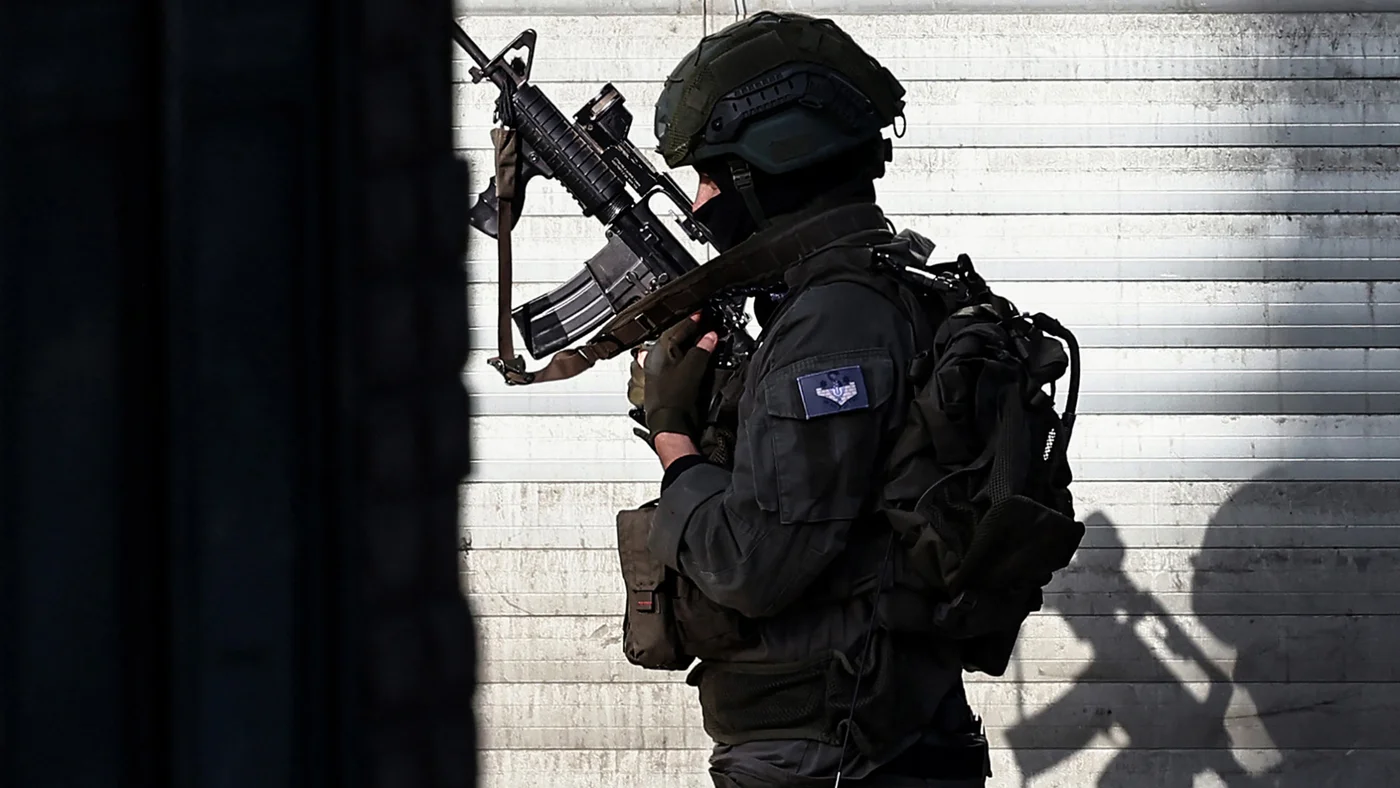
After 15 years in an Israeli prison, Salama Qatawi’s big day had finally arrived.
However, on the morning of his wedding, Israeli forces raided his home in the occupied West Bank town of Birzeit and re-arrested him.
He was released 14 hours later, just before the ceremony was due to begin. Outside the wedding hall, soldiers set up a military checkpoint, delaying arriving guests.
Such harassment has become routine for Qatawi since his release in February, as part of the second phase of a prisoner exchange agreement with Hamas.
Over the past year, Israeli forces have raided his home more than 15 times and repeatedly summoned him for questioning.
New MEE newsletter: Jerusalem Dispatch
Sign up to get the latest insights and analysis on
Israel-Palestine, alongside Turkey Unpacked and other MEE newsletters
The raids carried explicit warnings: he risked re-arrest if he engaged in political activity, attended public gatherings, or spoke to the media.
For a long time, those threats kept Qatawi, 43, silent about his ordeal.
His experience is shared by many Palestinians freed in the prisoner swaps.
Nearly 4,000 Palestinians were released in phased exchanges under Hamas-Israel agreements between November 2023 and October 2025.
Many, particularly those freed to the West Bank, have faced repeated home raids, summonses for interrogation and threats of re-arrest should they show any sign of celebration.
The Palestinian Prisoners Club reported that 80 released prisoners were re-arrested, while the homes of others – including those deported abroad – were raided and vandalised to signal ongoing surveillance and intimidation.
‘Deprived of a normal life’
The most recent re-arrest was Aseel al-Titi, 25, freed in November 2023 and detained again on Monday during an Israeli raid in Nablus.
Most of those re-arrested were released again after hours or days, though a small number remain in administrative detention without charge.
One of them is Raghad al-Fani, who was detained on 1 January and placed under a six-month administrative detention order, which can be renewed. Fani had been freed on the first day of the November 2023 prisoner exchange after spending a year in administrative detention.
‘I haven’t yet tasted the freedom I imagined; every step I take is scrutinised’
– Iyad Jaradat, released Palestinian prisoner
Since her release, the 26-year-old had not left her hometown of Tulkarm in the northern West Bank, fearing checkpoints, and continued her studies at a local university.
“Raghad was deprived of a normal life,” her mother, Mona al-Fani, told Middle East Eye.
“She could not travel between cities or even nearby villages for fear of being re-arrested.”
Fani’s lawyer told the family that no charges had been brought against her and that the prosecution cited a “secret file” to justify extending her detention, describing her arrest as “precautionary”.
‘We’ll keep coming to you’
Palestinians view such arrests as an attempt to assert control and deter former prisoners, forcing them to pay an additional price for freedom secured under exchange deals for Israeli captives.
Iyad Jaradat, from Silat al-Harithiya near Jenin, is another example. Since his name appeared on the prisoner exchange list, Israeli forces have raided his family home and issued threats.
In prison, an intelligence officer warned him during a meeting that lasted over an hour: “You will now leave as innocent as the day you were born, yet you will remain under our watch.”
After 22 years behind bars, Jaradat said the warning has proven true.
“I haven’t yet tasted the freedom I imagined; every step I take is scrutinised,” he told MEE.

‘This is revenge’: Israel deports Palestinian prisoners then bars families from visiting
Read More »
Emerging from years of solitary confinement, he felt like “a stranger” in his own community.
The first time the officer contacted him after his release, Jaradat did not even know how to use a smartphone.
When the officer raided his home over his delayed response, Jaradat explained – and the officer simply laughed.
Less than a week after his wedding, Jaradat said joy had given way to fear of night raids.
“I sleep in my going-out clothes, in case of sudden arrest,” he said.
Days before the wedding, Israeli forces had raided his home, ransacked it, beaten Jaradat’s brother and issued threats.
“I asked them to stick to phone calls,” Jaradat said.
“But they said: ‘We’ll keep coming to you through the window.’”
Fear of re-arrest
Jaradat questions the value of his release, given the restrictions that have left him and his family in a state of constant fear.
He said those who brokered the deal offered no guarantees against re-arrest, leading him to believe that deportation might have been preferable to this open-ended form of imprisonment.
Palestinian negotiators repeatedly sought guarantees from Israel that released prisoners would not be re-arrested, as had occurred after the 2011 Gilad Shalit swap.
But this time, the focus of talks – mediated to end the war and allow aid into Gaza – made such guarantees impossible, said Amani Sarahneh, media spokesperson for the Palestinian Prisoners Club.
The current approach continues a shift in Israel’s treatment of released prisoners that began in 2014, when many freed in the Shalit deal were re-arrested and their sentences reinstated by military order, Sarahneh told MEE.
According to the club, the targeting is focused on prisoners with symbolic, social, or media influence.
The aim, Sarahneh said, is to spoil their joy and reinforce that “the occupation’s hand is long”, even after release.
For Jaradat, the situation has affected not only his ability to enjoy the freedom he regained but also his capacity to plan for the future.
He was even forbidden from practising the barbering trade he had trained in, as it involved contact with others.
“Even on a social level, many families refused to allow their daughters into my family for fear of my re-arrest,” he explained, adding that he is not deluded about what could happen to him.
“Anything is possible. I am a realist, and I know that we are under occupation.”
