

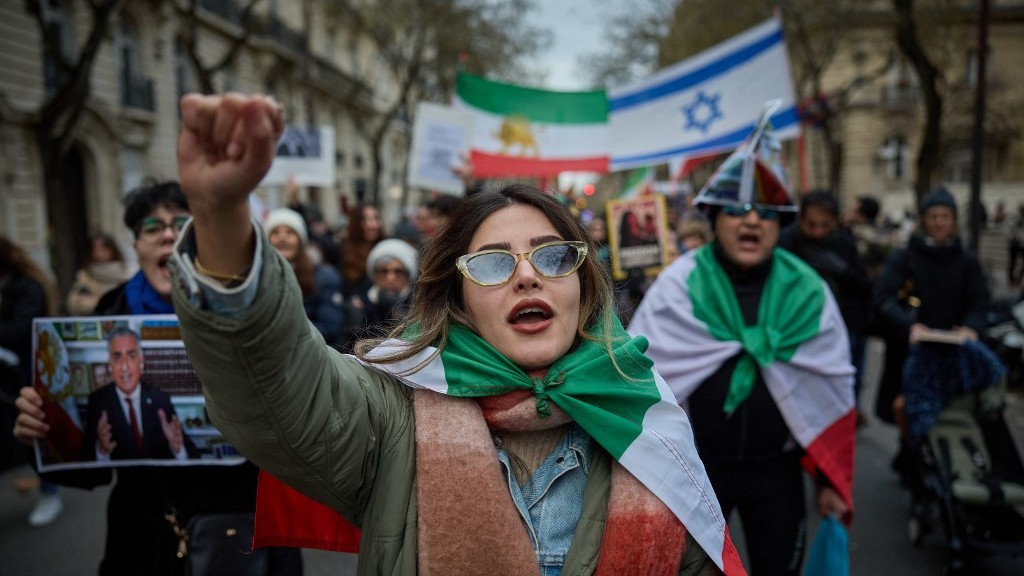
Iran’s foreign minister has accused the United States of deliberately inflaming unrest after days of nationwide protests and a sweeping internet shutdown left the country largely cut off from the outside world.
Speaking on Monday, Abbas Araqchi said the situation remained “under total control” but blamed Washington for encouraging violence by threatening action against Tehran.
He said US President Donald Trump’s public warnings had pushed armed groups to target both protesters and security forces in a bid to trigger foreign intervention.
Araqchi said Iranian authorities possessed footage showing weapons being distributed on the streets and would soon release confessions from detainees.
He added that officials were “closely following” developments and insisted the demonstrations were “stoked and fuelled” by foreign elements. Those responsible, he warned, would be pursued.]
New MEE newsletter: Jerusalem Dispatch
Sign up to get the latest insights and analysis on
Israel-Palestine, alongside Turkey Unpacked and other MEE newsletters
Araqchi said that the protests that erupted on December 28 began “calmly and legitimately, but quickly deviated from their course and turned into a terrorist war against the country,” aided by foreign intelligence agencies, including Mossad.
The Iranian foreign minister added that security forces initially handled the demonstrations “calmly and with restraint” before “armed terrorist” groups infiltrated the protests and diverted them from their original course.
At least 192 people have been killed in the largest protest against the Iranian government for over three years, according to Iran Human Rights, a Norway-based NGO. Iran has not given an official toll death tallies could not be independently verify.
‘Tyrants of this world will be overthrown’
Iran’s supreme leader, Ayatollah Ali Khamenei, appeared to respond directly to Trump’s rhetoric in a sharply worded social media post on Monday.
Writing in Persian, he said: “Let that fellow who sits there with arrogance and pride, judging the whole world, also know that the tyrants and the arrogant of this world, such as Pharaoh, Nimrod, Reza Shah, Mohammad Reza Shah and the like, were overthrown when they were at the height of their pride; he too will be overthrown.”
As political tensions rose, Iran entered its fourth day of near-total internet blackout. Internet monitor NetBlocks said the country remained in a “national internet blackout”, with only limited and unstable connectivity.

Israeli social media erupts with calls for overthrowing Iran’s government
Read More »
The United Nations has urged restraint. Secretary-General Antonio Guterres voiced concern over reports of “violence & excessive use of force” and called on Iranian authorities to “exercise maximum restraint & refrain from unnecessary or disproportionate use of force”. He also pressed Tehran to restore internet access.
Washington, meanwhile, is openly discussing coercive measures against Tehran. Trump was due to meet senior advisers to review options that reportedly include cyber attacks, tougher sanctions and even military strikes. “The military is looking at it, and we’re looking at some very strong options,” Trump told reporters travelling on Air Force One on Sunday night.
Iranian parliamentary speaker Mohammad Baqer Qalibaf warned the US against “a miscalculation”, saying: “let us be clear: in the case of an attack on Iran, the occupied territories (Israel) as well as all US bases and ships will be our legitimate target.”
The protests began on 28 December over soaring prices before widening into anger at Iran’s ruling politicians. State media said authorities had called for nationwide rallies to denounce what they described as “terrorist actions led by the United States and Israel”.
