

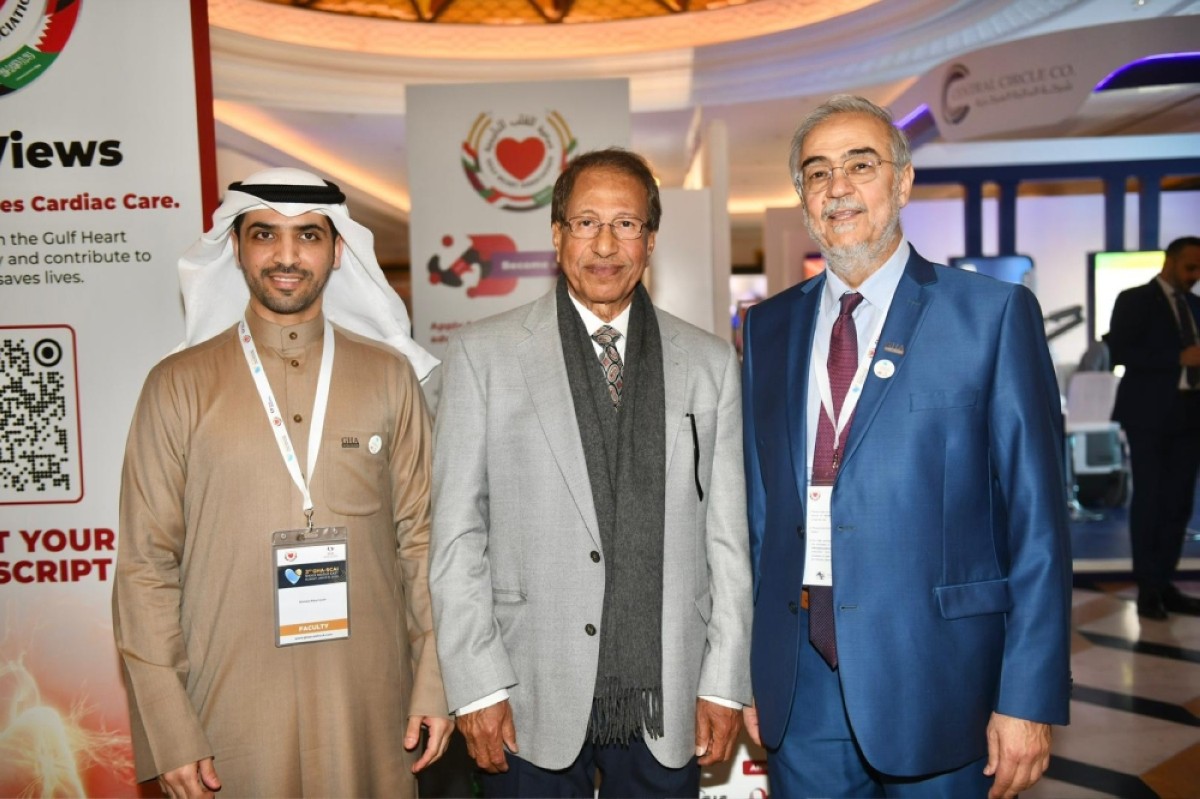
KUWAIT: Cardiac shock is one of the most serious complications associated with acute heart attacks, said Prof Dr Mohammed Zubaid, President of the Gulf Heart Association and Vice President of the Kuwait Heart Association. According to global statistics, cardiac shock affects between three and 10 percent of heart attack patients, with high mortality rates reaching 40-50 percent despite significant advances in medical treatments and technologies, he said.
Dr Zubaid made the statement on the sidelines of the opening of the third conference on cardiac shock, GHA–SCAI Shock Middle East, which opened on Saturday, January 10. It features the participation of a group of international and regional experts in cardiology and advanced cardiac interventions, including doctors from outside Kuwait, reflecting the international nature and scientific importance of the conference.
Dr Zubaid explained that cardiovascular disease remains the leading cause of death worldwide, with tens of thousands of cases of cardiac shock recorded annually. Medical records in the Gulf countries show that about four percent of patients with acute heart attacks suffered cardiac shock, with in-hospital mortality rates approaching 45 percent, reflecting the magnitude of the health challenge posed by this critical condition.
The professor of cardiology at Kuwait University added that according to a recent study by the Kuwait Heart Association, more than 300 cases of cardiac shock were recorded in Kuwait in one year. The mortality rate in these cases reached about 50 percent, despite rapid medical intervention and the application of all advanced therapeutic procedures, including emergency cardiac catheterization and the use of devices to support and stimulate the heart muscle.
This highlights the need to raise awareness of this serious disease and develop diagnosis and treatment protocols. It also emphasizes the importance of holding such specialized scientific meetings to discuss the latest developments and ways to improve patient survival rates.


Prof Dr Mohammed Zubaid
Integrated healthcare
Dr Ahmed Al-Kharazah, consultant cardiologist and interventional cardiologist at Al-Dabous Heart Center said the Kuwait conference was a continuation of a series of specialized meetings, the first of which was launched in Dubai in 2024, followed by the second edition in Riyadh in 2025. The conference is organized by the Kuwait Heart Association and the Gulf Heart Association, in collaboration with the Society for Cardiovascular Angiography and Interventions (SCAI).
Al-Kharazah, who is also the conference’s media officer and head of the scientific training workshops committee, said it aimed to discuss the latest scientific developments and treatment protocols in the diagnosis and treatment of cardiac shock and to promote the exchange of international experience. Such discussions contribute to improving the quality of health care and reducing mortality rates associated with critical cardiac conditions, said Al-Kharazah, who is also a member of the conference’s scientific committee.
Dr Fahad Al-Hajri, Consultant Cardiologist and Interventional Cardiologist at Mubarak Al-Kabeer Hospital and Chairman of the Scientific Committee of the conference, said that the two-day conference program included specialized workshops and interactive scientific sessions focused on early diagnosis of cardiac shock, advanced hemodynamics and the use of mechanical circulatory support technologies such as ECMO and Impella. The conference also discussed the role of multidisciplinary medical teams in improving treatment outcomes and saving patients’ lives.
It witnessed wide participation from cardiologists, emergency and intensive care physicians and cardiac surgeons in the context of promoting integration between different medical specialties and exploring ways to develop integrated cardiac shock care systems at the regional level. It also saw the participation of nursing and technical medical staff, contributing to the qualitative transfer and continuous development of institutional medical work.
Dr Abdullah Ismail, Consultant Cardiologist and Interventional Cardiologist and Head of the Cardiology Department at Mubarak Al-Kabeer Hospital, emphasized that the conference provided an important opportunity to exchange scientific and medical expertise at the regional and global levels and to strengthen cooperation between various medical specialties in the field of critical cardiac care.
He added that the conference allowed for the exchange of experiences between a select group of international and regional experts, contributing to the development of national programs that improve the quality of medical services and lead to reducing mortality rates associated with cardiac shock in the region.
