

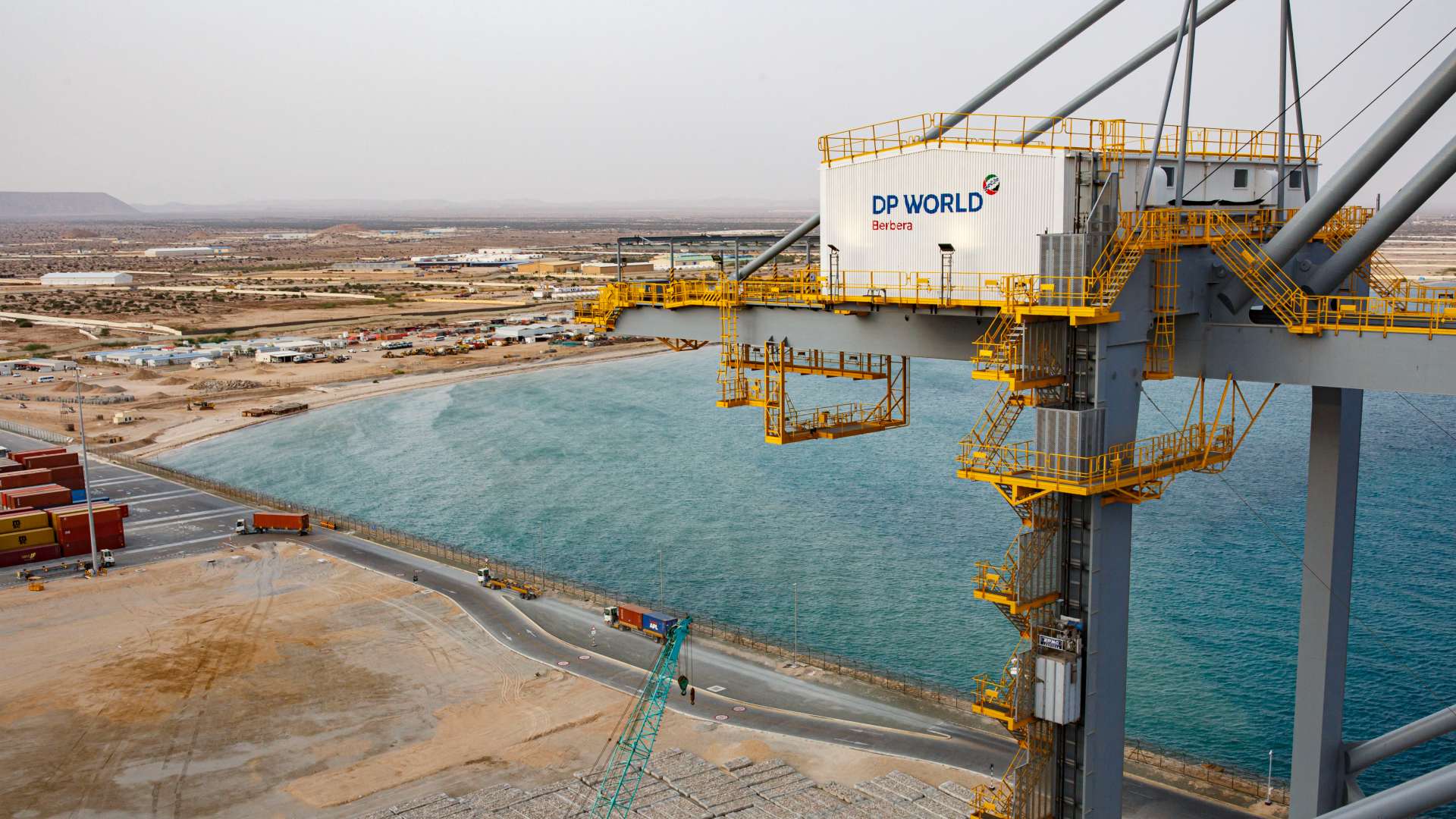
The British government co-owns a UAE-controlled port in Somaliland that is part of a network of Emirati infrastructure used to arm the paramilitary Rapid Support Forces (RSF) accused of committing atrocities in Sudan.
The UK’s stake in Berbera port is held through the government’s foreign investment arm, British International Investment (BII), which jointly owns the strategic Horn of Africa port with the UAE’s logistics behemoth DP World and the Government of Somaliland.
Somaliland, a former British colony, is a breakaway region of Somalia that is currently at the centre of a diplomatic controversy after Israel last month became the only country in the world to recognise its independence from Mogadishu in a move that has drawn widespread international condemnation.
An impact assessment report of BII’s investment in Berbera, commissioned by the UK foreign office and published last month, described Berbera as “a strategic gateway to Somaliland and a potential alternative trade corridor for Ethiopia”.
But the UK’s partnership with DP World in Berbera port appears to raise questions about a possible conflict of interest between its commercial activities and its diplomatic posturing on the war in Sudan, where the UAE is accused of supporting the RSF against the Sudanese government.
New MEE newsletter: Jerusalem Dispatch
Sign up to get the latest insights and analysis on
Israel-Palestine, alongside Turkey Unpacked and other MEE newsletters
The UK, like the United States and the European Union, has sanctioned RSF commanders “suspected of atrocities including mass killings, sexual violence, and deliberate attacks on civilians in El Fasher, Sudan”.
The RSF has been widely accused of committing genocide in Darfur, western Sudan, and while the UAE continues to deny supplying the group, which is led by Mohamed Hamdan Dagalo, the general better known as Hemedti, the evidence – including flight tracking, cargo inventories and multiple official sources in Sudan and beyond – is mounting.
The UAE has, according to diplomatic sources, used what US President Donald Trump has referred to as its “unlimited cash” to put pressure on the UK not to call out its role in the Sudan war.

How the UAE built a circle of bases to control the Gulf of Aden
Read More »
British-made military equipment exported to the UAE has been discovered in Sudan and the UK’s extensive commercial ties to the Emirates are under increasing scrutiny.
While not part of the UAE’s nearby naval base and military runway, Berbera port forms part of a chain of Emirati-owned infrastructure that stretches across the Horn of Africa and the Red Sea.
Amgad Fareid Eltayeb, director of Fikra, a Sudanese public policy organisation, told Middle East Eye: “The UK cannot credibly call for a ceasefire, accountability, and civilian protection in Sudan while tolerating or participating in regional arrangements that keep armed actors liquid, mobile, and insulated from pressure.”
A spokesperson for BII told MEE it was a minority investor in Berbera’s commercial port and said the port was “entirely unconnected” to nearby Emirati military facilities.
The spokesperson said: “The modernisation of the port at Berbera is critically important to the development of the region. In addition to providing genuine economic and employment opportunities to the 5.7 million people of Somaliland, it will open up a second maritime corridor for more than 100 million people living in Ethiopia.”
Gideon Saar in Somaliland
Berbera, which is situated just 250km from the Bab al-Mandab strait through which 30 percent of the world’s oil is shipped, has this week been at the centre of a number of dramatic, intersecting news stories.
In recent days the port city has played host to Israeli Foreign Minister Gideon Saar, who was there as part of a first official visit to Somaliland since Israel recognised the territory. Talks have included discussions about a proposed Israeli military base, Israeli media reported on Thursday, citing a Somaliland official.
Then on Thursday, a ship carrying Aidarous al-Zubaidi, the Yemeni southern separatist leader backed by Israel’s ally, the UAE, docked in Berbera.
Saudi Arabia has accused the UAE of orchestrating a covert operation under which Zubaidi escaped Yemen for Somaliland.
Foreign ministers from Saudi Arabia and other regional states including Qatar, Iran, Turkey, Jordan, Oman, Kuwait, Sudan and Yemen on Friday issued a statement condemning Saar’s visit to Somaliland and reaffirming their support for Somalia’s government in Mogadishu.
“The ministers underline that encouraging secessionist agendas are unacceptable and risk exacerbating tensions in an already fragile region,” the statement said.
Once referred to by 19th-century British explorer Richard Burton as the “true key of the Red Sea, the centre of East African traffic”, the UK’s involvement in Berbera port’s rapid development since 2022 has received little to no media attention.
Originally known as the Colonial Development Corporation, BII is entirely owned by the Foreign, Commonwealth and Development Office, its only shareholder, although it says that the FCDO has an “arm’s-length governance model” which means that investment decisions are independent of government.


In early 2022, BII joined DP World Berbera and the Somaliland government as a minority investor in the expansion of Berbera port, as part of a broader partnership with DP World known as Africa Gateway to “support the modernisation and expansion of ports and inland logistics across Africa and to improve African trade with the rest of the world”.
BII also took stakes in ports in Sokhna, Egypt, and Dakar, Senegal. It initially committed $320m in funding and said it expected to invest a further $400m over the next several years.
Work to develop the port has included building a new quay, deepening the harbour’s draught, and installing modern cargo-handling equipment to accommodate larger ships and increased container traffic, according to the FCDO-commissioned impact assessment report.
It said the expansion and associated projects had created almost 2,500 jobs and added $45m in value to the Somaliland economy, with Berbera emerging as a regional rival to Djibouti, which currently handles 95 percent of Ethiopia’s trade.
The UK and the UAE have other complementary business interests in Somaliland.
Both the UK-listed firm Genel Energy and the UAE’s RakGas have licences to drill for oil in the territory, with Somaliland President Abdirahman Mohamed Abdullahi Irro recently saying that drilling for crude oil is expected to begin by 2027.
Israel’s recognition of Somaliland has also led to speculation that Ethiopia could be poised to do the same.
Just before Israel’s recognition of Somaliland on 26 December, a high-level Ethiopian delegation visited Berbera port and the adjacent Berbera Economic Free Zone.
A few days later, Ethiopia’s foreign minister refused to answer questions about whether his country would follow Israel in recognising Somaliland.
With concerns over China’s presence close to Camp Lemonnier in Djibouti, the US also sees Berbera as an alternative strategic option to strengthen its presence in the Red Sea and the Horn of Africa.
In March this year, Somaliland rejected an attempt by Somalia’s central government in Mogadishu to give the US exclusive control of the port and airbase at Berbera.
But at the end of July, Somaliland’s Abdullahi announced that he had changed his mind, saying his administration was prepared to host a US military base at Berbera and offer access to valuable mineral resources, including lithium, as part of a broader strategy to gain international recognition.
In July last year, former Israeli military intelligence researcher Amit Yarom made the case for Israeli recognition of Somaliland on the Atlantic Council’s website.
“With nearly a third of global shipping passing through this corridor, threats from piracy, weapon smuggling, and terrorist groups like al-Shabab and the Houthis have drawn international concern,” Yarom wrote.
“For both Israel and the United States, Somaliland presents an opportunity for strategic collaboration.”
‘Lifeline of support’
In 2017, Somaliland accepted an Emirati bid to establish a military base there, hoping that this relationship would strengthen its case for breaking away from Somalia.
Satellite imagery analysed by MEE shows that in Berbera, the naval base was quietly transformed from a stalled project to a nearly completed facility, with advanced infrastructure including a modern military port, a deep-water dock, an airstrip with hangars and support facilities.
The runway at Berbera is 4km long – one of the longest in Africa, owing in part to the fact that it was once rented by Nasa as a potential emergency landing strip for the Space Shuttle – meaning it can receive heavy transport aircraft and fighter jets.
The creation of all these facilities has turned the base in Somaliland into a regionally important strategic hub, one that is connected to a ring of UAE bases including those in Sudan, Yemen, Bosaso in Somalia’s Puntland region, the islands of Abd al-Kuri and Samhah, and Mayun, a volcanic island in the Bab al-Mandab strait.
These bases, developed with the assistance of Israel and the US, are being used to conduct operations against the Iran-aligned Houthi movement, for intelligence purposes – Israel and the UAE have an intelligence-sharing platform known as Crystal Ball – and to control maritime traffic in one of the most congested, important routes on the planet.
They are also, as multiple sources including Nathaniel Raymond, executive director of Yale’s Humanitarian Research Lab (HRL), confirmed, being used to supply the RSF in Sudan.
In December 2024, Reuters reported that flights from the UAE stopping off at Berbera had been carrying military equipment, according to information including the landing requests sent to airport authorities.
BII’s spokesperson told MEE: “BII is a minority investor in Berbera’s commercial port alongside DP World, a global leader in the development and operations of ports. This port is located 10km away and is entirely unconnected to the military facility that you reference.”
But Amgad Fareid Eltayeb, the director of Fikra, told MEE that the port was part of the UAE’s “lifeline of support” that had allowed the RSF to prolong the war.
“Sudanese people are not asking for symbolic statements or selective diplomacy. They are asking whether international partners are willing to dismantle the logistics of war, not quietly profit from or stabilise them elsewhere,” he said.
“Any British role in Berbera that is not explicitly conditioned on preventing its use in fuelling conflicts – particularly Sudan’s – will be read in Sudan not as neutrality, but as complicity by omission.”
