

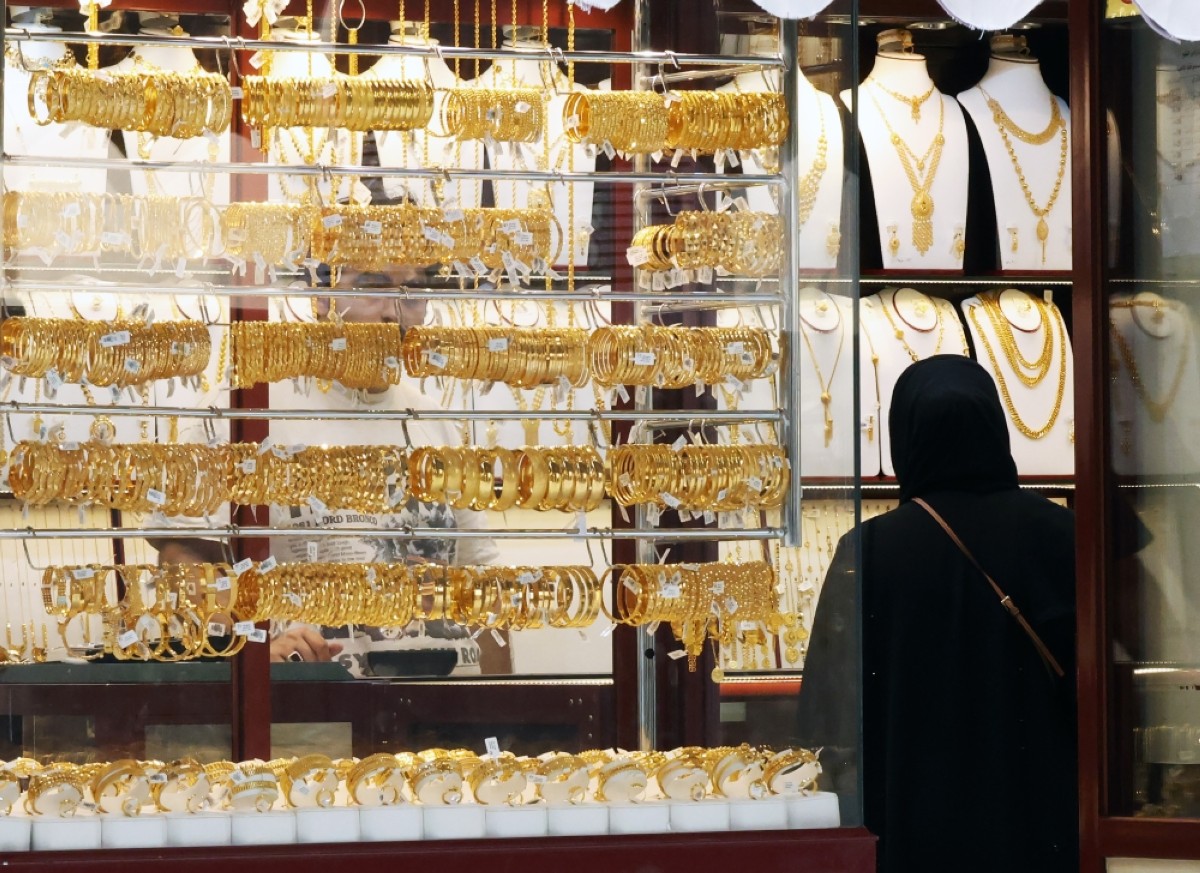
KUWAIT: Gold prices surged to a record high on Monday as investors grew increasingly optimistic that the US Federal Reserve will continue cutting interest rates through next year. The precious metal reached a peak of $4,383.76 in early trade, with Monday’s gains pushing gold past its previous record of $4,381.52, set in October.
In Kuwait, the ministry of commerce and industry recently issued a decision banning cash transactions in shops dealing with gold, precious stones and precious metals. Under the new regulation, all payments must be made through non-cash payment methods approved by the Central Bank of Kuwait.
Following the implementation of the decision, Ameen Al-Qattan, owner of a gold jewelry shop, said sales initially declined slightly, but have since improved as the market adjusted and the situation became clearer. “People who were already conducting proper transactions, whether through payment links, digital wallets or company-based payments, were not affected at all. Customers can still make purchases normally at any time,” he said.
Al-Qattan explained that his banking arrangements are clear and well-organized. “I use payment links, the amount is deducted directly from the bank card, and my transaction limits have been increased, so I do not face any issues,” he added. He noted that cash transactions in the gold market were previously widespread but believes they will gradually disappear.
“This is a better option, as banning cash payments protects both the merchant and the customer and limits manipulation. Sometimes precious items may be stolen or suspicious, and this system helps detect such cases and provides protection for everyone,” he said. Al-Qattan added that if a person is unable to pay or a trader attempts to exploit the system by selling items at inflated prices, this becomes evident through digital transaction records.
Ahmad Gad Ahmad, a gold seller, said the ministry’s decision did not affect the Mubarkiya market, but may have impacted other areas such as Hawally, Maliya and Salmiya. He attributed this to the fact that many buyers in those areas are Indian and Filipino customers who previously relied heavily on cash payments. When purchasing used gold from customers, payments are now made through payment links.
Ahmad added that Gulf customers are also facing payment challenges, as many do not have Kuwaiti bank accounts and were accustomed to paying in cash. He noted that the decline in market activity is mainly due to rising gold prices rather than the cash ban itself.
Abu Abdullah, a customer who recently sold old jewelry amid soaring prices, said the shift to cashless gold trading poses no inconvenience for buyers or sellers. “I have no issues with digital-only payments for gold transactions,” he said. “Most people sell gold to buy property, educate their children or cover medical expenses, and will anyway have to deposit the cash in the bank to remit money or pay bills. Digital payments leave a trail, which avoids problems related to unexplained cash.”
On the religious aspect of the ministry’s decision, Dr Abdul Fattah Hammam, a sharia researcher, explained Islamic law sets specific conditions for trading in gold or silver, namely actual possession and constructive possession. He explained that actual possession refers to conducting the transaction hand-to-hand, while constructive possession involves the use of alternative payment methods such as bank cards.
“This form of transaction is permissible provided that the payment is received at the same moment and is not deferred,” he said, stressing that the sale of gold requires immediate exchange. Hammam concluded that gold must be exchanged for money or for another amount of gold within the same transaction session through hand-to-hand delivery, or be deemed constructively received through an instant bank transfer, such as WAMD, or an actual deposit into the seller’s account before the transaction is concluded.
