

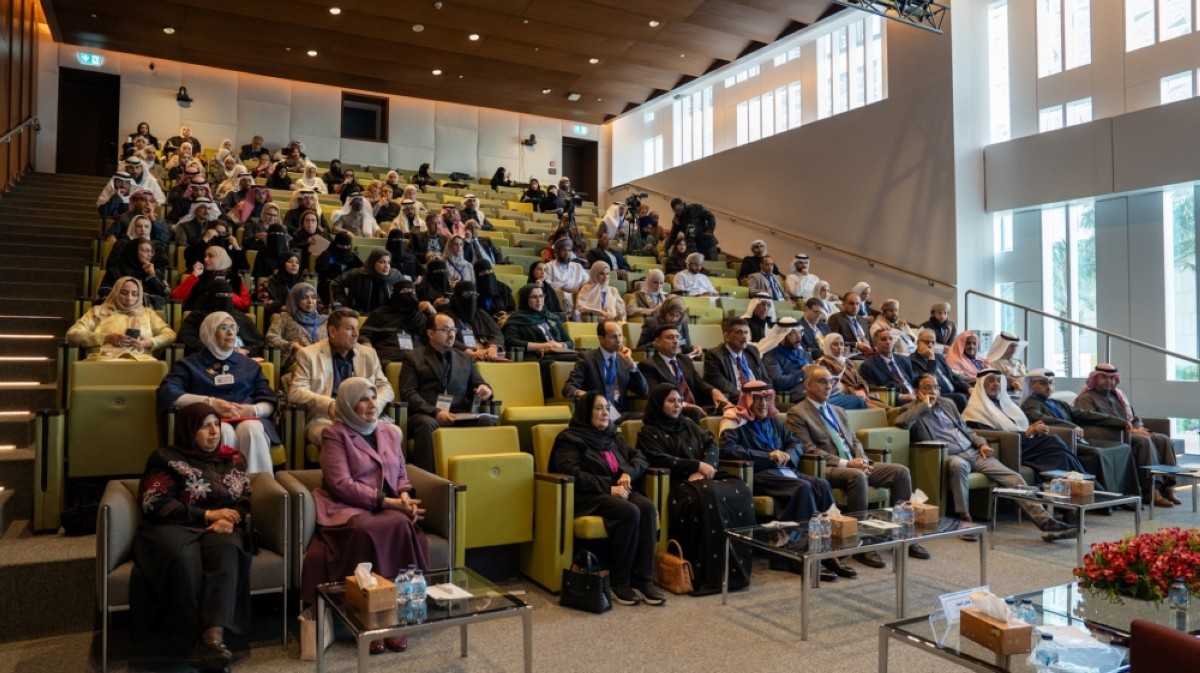
KUWAIT: The scientific conference titled “Culture and Identity in the Arabian Gulf Society” opened on Tuesday at Sabah Al-Salem University City. The two-day event is organized by the Center for Gulf and Arabian Peninsula Studies in cooperation with the Journal of Gulf and Arabian Peninsula Studies, with the participation of specialists and researchers from across the Gulf region. Secretary-General of the National Council for Culture, Arts and Letters (NCCAL) Dr Mohammad Al-Jassar, who is patron of the conference, said in his opening remarks that the event contributes to fostering serious academic and critical dialogue on Gulf culture and identity through a select group of scholars specializing in Gulf and Arabian Peninsula studies.
Dr. Al-Jassar stressed that culture in the Gulf in general, and in Kuwait in particular, lies at the core of the Council’s priorities, as it is closely linked to the rapid changes and transformations experienced by society. He noted that the current historical phase is marked by sweeping global transformations and unprecedented technological revolutions, which directly affect societal values and knowledge structures, raising fundamental questions about the relationship between culture and identity.
He added that these global changes, alongside regional and local challenges such as environmental degradation and social, political and cultural pressures, necessitate a deeper examination of the resilience of Gulf culture and identity and their capacity to adapt while maintaining their core foundations. Understanding these transformations, he said, is closely tied to economic and cultural development.
For his part, Vice President for Research and Conference Chairman Dr. Abdullah Sultan said the conference theme underscores the importance of harnessing technology as a tool to strengthen identity and values, rather than allowing it to undermine them. He emphasized the need to achieve a balanced integration between tradition and modernity. Dr Sultan explained that over the course of two days, academics and researchers will address social, cultural, legal, and jurisprudential issues related to culture and identity in the Arabian Gulf. The discussions are expected to contribute to the formulation of perspectives and policies that support the development of a strong Gulf identity capable of engaging positively with the world without compromising its fundamental principles.
In his address, Acting Director of the Center for Gulf and Arabian Peninsula Studies and Chairman of the Conference Organizing Committee Dr Yaqoub Al-Kandari said the conference seeks to achieve specific research objectives through a comprehensive academic roadmap. This includes examining contemporary global transformations, the relationship between culture and identity, debates surrounding Gulf identity, and the role of folklore in shaping collective consciousness.
Dr Al-Kandari emphasized that rigorous scientific research remains the most effective tool for addressing complex issues, adding that the conference provides an important platform for enhancing cooperation, unity, and knowledge integration among research centers in Gulf Cooperation Council (GCC) countries. He expressed hope that the presented papers would lead to practical recommendations that strengthen citizenship, belonging, and identity, while clarifying the features of heritage and culture and their relationship to Gulf societies. – KUNA
