

The past year was one of the most volatile and violent in modern Arab history, largely due to the actions of two states: Israel and the UAE.
Israel’s war on Gaza, and its wide-ranging expansionist aggression, dominated Arab politics. Meanwhile, the UAE’s continued backing of the Rapid Support Forces (RSF) in Sudan, combined with its policies in Yemen, Libya, Somalia and elsewhere, further fuelled regional instability and violence.
Both Israel and the UAE have long sought to expand their own regional influence by fragmenting and weakening other states.
In 2025, in response to Israeli and UAE belligerence, Arab countries were forced to either absorb attacks, mediate for peace, or reevaluate geopolitical alliances. The extent to which these two nations can be reined in will have serious implications for how the Arab region fares in 2026.
For years, the UAE has worked to expand its sphere of power by supporting various non-state Arab secessionist movements.
New MEE newsletter: Jerusalem Dispatch
Sign up to get the latest insights and analysis on
Israel-Palestine, alongside Turkey Unpacked and other MEE newsletters
Seen most clearly in Sudan, Yemen, Libya and Somalia, this strategy has served to further divide and weaken several Arab nations, enabling the UAE to establish important levers of control.
Throughout 2025, the UAE continued to arm the RSF in Sudan, even as the paramilitary group committed mass atrocities against civilians that might amount to genocide. The UAE also has military bases in Sudan in areas under RSF control.
In Yemen, the UAE backs the Southern Transitional Council (STC), a separatist entity that seeks to divide Yemen and cosy up to Israel. The STC may be on the verge of declaring independence, formally dividing Yemen for the first time in decades.
Expanded military presence
The UAE also continues to prop up Libyan commander Khalifa Haftar, with recent reports suggesting that he has been supplying fuel to the RSF on the UAE’s behalf. Haftar’s struggle against the internationally recognised Libyan government based in Tripoli has long depended fundamentally on Emirati support.
Abu Dhabi also provides critical support to Somaliland and Puntland in their battles against the Mogadishu-based government of Somalia.
The UAE’s maneuvering in Sudan, Yemen and Somalia has allowed it to significantly expand its military presence in the region. Alongside its bases in Sudan, the UAE has established critical new military bases in the Red Sea and Gulf of Aden.
Israel’s plan for Syria is transparent: divide it into multiple states, further weaken and destabilise it, and use the territory for Israeli expansion
At the same time, the UAE provides crucial assistance for one of the Arab region’s most repressive dictators: Egypt’s Abdel Fattah al-Sisi.
Israel’s divide-and-conquer policy – driven by its vision of Greater Israel, the Zionist notion that the massive area between the Euphrates and Nile rivers was promised to Israel by God – is significantly more aggressive and openly violent than the UAE’s.
This objective is deeply rooted within Israeli politics, but in the past, it was often left unspoken. In recent months, however, Israeli Prime Minister Benjamin Netanyahu has acknowledged his “historic and spiritual mission” to achieve Greater Israel.
To this end, Israel has, for more than two years, decimated Gaza, carrying out what a near-consensus of scholars, experts and rights groups consider a genocide. It has become clear that Israel’s aim in Gaza is to eliminate the Palestinian population and take over as much of their land as possible.
The Israeli army’s chief of staff recently said that the Yellow Line, a withdrawal point outlined in US President Donald Trump’s Gaza ceasefire plan, would constitute a new Israeli border.
Grabbing more land
Israel is pursuing a similar policy in the occupied West Bank, where land confiscations, home demolitions and illegal settlement expansion accelerated in 2025 – including the approval of a massive new settlement project, E1, that would effectively divide the West Bank in two.
In addition, Israel’s finance ministry has just allocated $840m to further settlement expansion over the next five years. The attempt to erase Palestinians from their land has never been so open and explicit.
Consistent with the Greater Israel vision, Israel is also illegally occupying significant parts of Lebanon and Syria. The Israeli army launched hundreds of attacks on Lebanese territory in 2025, despite signing a November 2024 ceasefire deal with Hezbollah.
In Syria, the December 2024 fall of dictator Bashar al-Assad led to the start of that nation’s post-authoritarian transition. The transitional administration, led by President Ahmed al-Sharaa, signalled from the start that it didn’t want conflict with Israel.
Despite Sharaa’s peaceful posture, Israel has launched hundreds of unprovoked attacks on Syrian territory. Israel’s plan for Syria is transparent: divide it into multiple states, further weaken and destabilise it, and use the territory for Israeli expansion.
In what would amount to a massive land grab, Israel is already working on a plan, which has been dubbed “David’s Corridor”, to connect the occupied Golan Heights to the Euphrates area.
Israel also launched attacks on three other Arab countries in 2025: Yemen, Tunisia and Qatar. All of these attacks on Arab states came in addition to a joint Israeli-US military campaign against Iran in June.
Working together
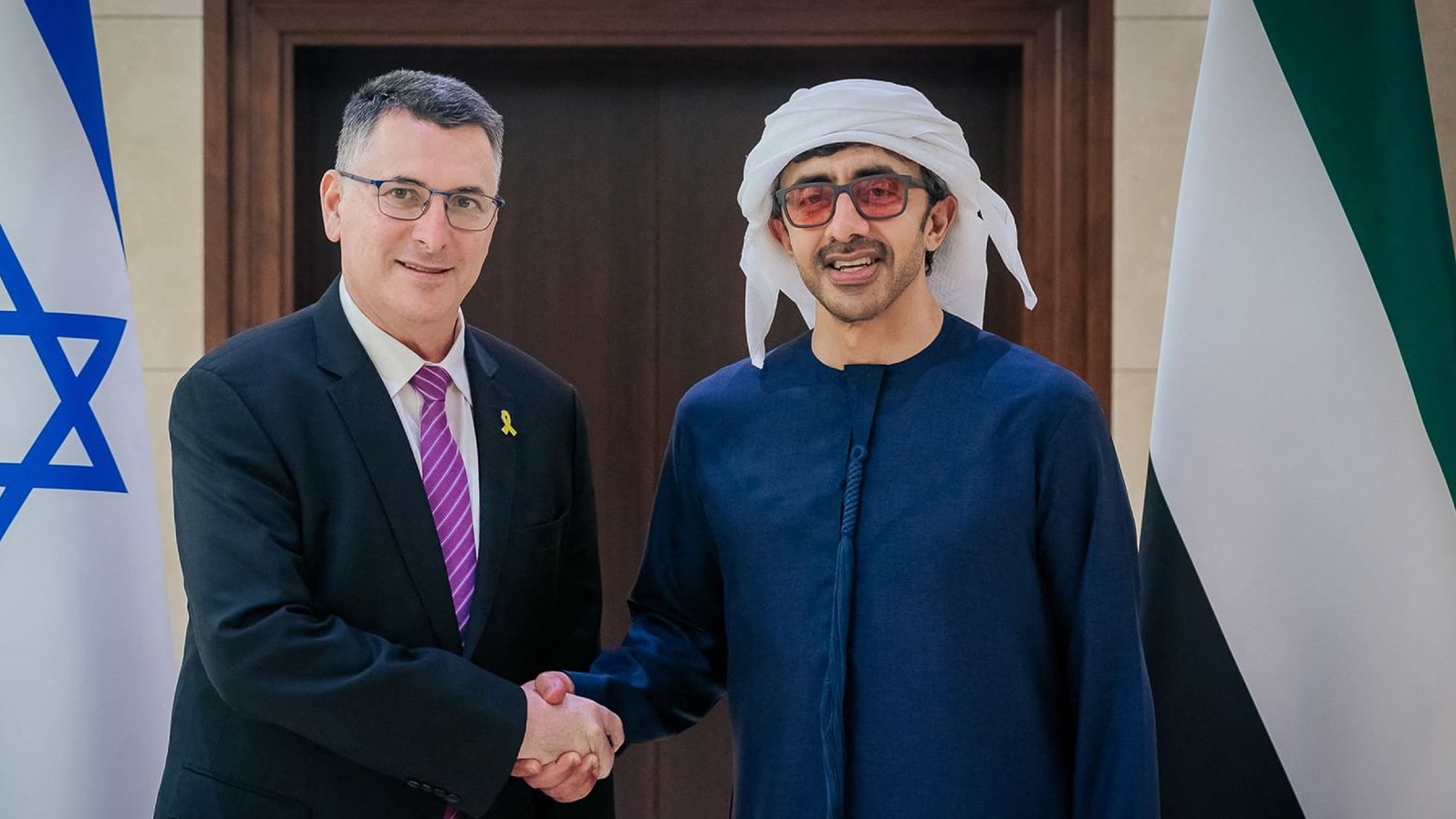
In 2020, the UAE and Israel signed a historic normalisation deal. Since then, they have deepened economic ties and coordinated closely on multiple political fronts, including through the Crystal Ball intelligence-sharing platform and on Yemen policy. Israel and the UAE are also aligned on Sudan and Somaliland.
Some tensions notwithstanding, Israel and the UAE are mostly aligned on the question of Palestine as well. For example, when Trump in January proposed a Gaza ceasefire plan that would have entailed the mass expulsion of Palestinians, the UAE broke Arab ranks by signalling openness to the idea.

Money, mercenaries and mayhem: How Israel and UAE are investing in regional chaos
Read More »
Then, in March, when the Arab League proposed its own plan for Gaza, the UAE reportedly lobbied the Trump administration to reject it.
There are a number of crises and conflicts in the broader Arab world, but the outcomes in Gaza and Sudan may be the most consequential for the region. In Gaza, it remains unclear how the remaining phases of the Trump ceasefire plan will proceed. Israel continues to attack Gaza on a near-daily basis and has signalled its intent to remain in the territory.
Arab states, with perhaps the exception of the UAE, would like to see the US lead a diplomatic process to a viable, contiguous Palestinian state in Gaza and the West Bank, with East Jerusalem as its capital. But given Israeli intransigence and Trump’s apparent acquiescence to Tel Aviv’s Greater Israel ambitions, the idea of a Palestinian state seems like a pipe dream.
Nonetheless, Arab states are fully aware of Arab public opinion against Israeli transgressions, the occupation of Palestine, and further normalisation with Israel.
Precarious situation
Saudi Arabia, Egypt and Qatar each have meaningful leverage with the US administration – and the extent to which they are willing to exercise it could determine what happens in Gaza in 2026.
If Israel is able to impose its will, take over more of Gaza’s territory and secure more Arab normalisation deals, the implications will be significant – not only for the Palestinian cause, which would by then be effectively buried, but also for Arab nations unwilling to be subsumed by Israeli hegemony.
A very close eye must also be kept on Sudan in the coming year. The humanitarian crisis there is staggering, with more than 150,000 people already killed and millions more displaced.
For how long will Arab governments allow the Sudanese army to fend for itself against an RSF propped up almost exclusively by the UAE?
For how long will Arab governments allow the Sudanese army to fend for itself against an RSF propped up almost exclusively by the UAE? At what point, if any, will Arab states decide to rein in the UAE?
Attention must also remain focused on Syria, whose situation remains precarious, even as Syrians celebrate the first anniversary of the fall of Assad.
How will the Sharaa administration manage the Syrian economy and respond to calls for greater levels of inclusivity, particularly in the wake of coastal violence last March that left hundreds dead? More importantly, perhaps, to what extent will Israel be allowed by its closest ally, the US, to thwart Syria’s fragile transition towards sovereignty and stability?
There are numerous other pressing questions across the Arab world, but arguably none are more consequential than whether Israel and the UAE will face real regional or international resistance in 2026 – or whether their destabilising influence will be allowed to continue.
The views expressed in this article belong to the author and do not necessarily reflect the editorial policy of Middle East Eye.
