

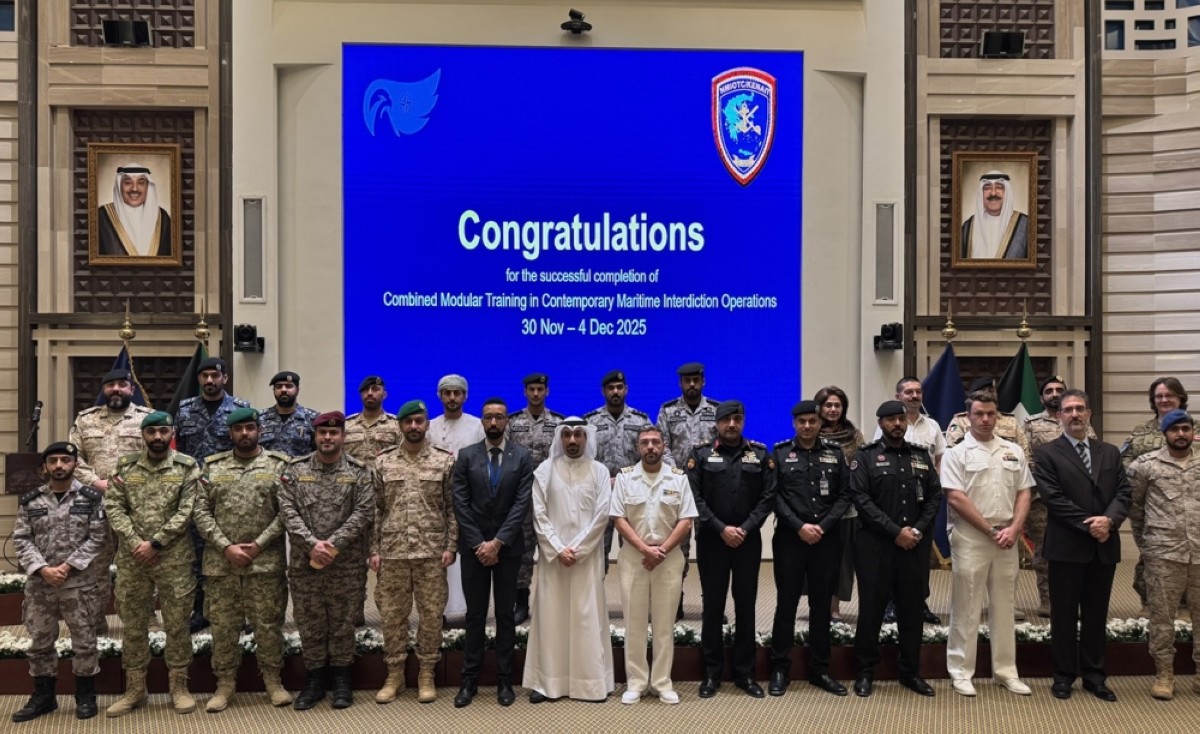
KUWAIT: The NATO Regional Center and the Istanbul Cooperation Initiative concluded a training course in Kuwait on Thursday on “Joint Standardized Training in Contemporary Maritime Interdiction Operations,” with the participation of 20 military personnel from the Gulf Cooperation Council (GCC) countries.
The Center’s Director, Advisor Emad Al-Kandari, told KUNA after the conclusion that the five-day course aimed to present maritime interdiction operations as a key factor in enhancing maritime security. Al-Kandari added that the course, presented by a Greek team from NATO’s Maritime Interdiction Operations Directorate, headed by the Commander of the NATO Maritime Security Operations Training Center (NMIOTC), Commodore Pericles Pepis, addressed the importance of naval power, port protection, the security of vital maritime infrastructure, defense against chemical, biological, and radiological weapons and materials on land, and clarified the necessary legal aspects of maritime operations.
He noted that the course included a number of workshops and practical virtual exercises simulating the handling of specific case studies. The topic was discussed, and several lessons learned from previous experiences were presented by the training team. On another note, Al-Kandari stated that a bilateral meeting was held with Commodore Pericles Pepis, to enhance cooperation between the two centers by supporting the programs offered at the regional center.
He explained that the Maritime Interdiction Operations Center has the capability to offer more specialized courses related to interdiction operations, particularly in the field of cybersecurity, which would strengthen cooperation in this emerging area of paramount importance in maritime interdiction operations.
He pointed out that the center’s hosting of this course and other training programs in Kuwait underscores Kuwait’s role as a key partner within the Istanbul Cooperation Initiative and also reflects the center’s commitment to supporting and developing regional capabilities and enhancing cooperation with partner countries. – KUNA
