

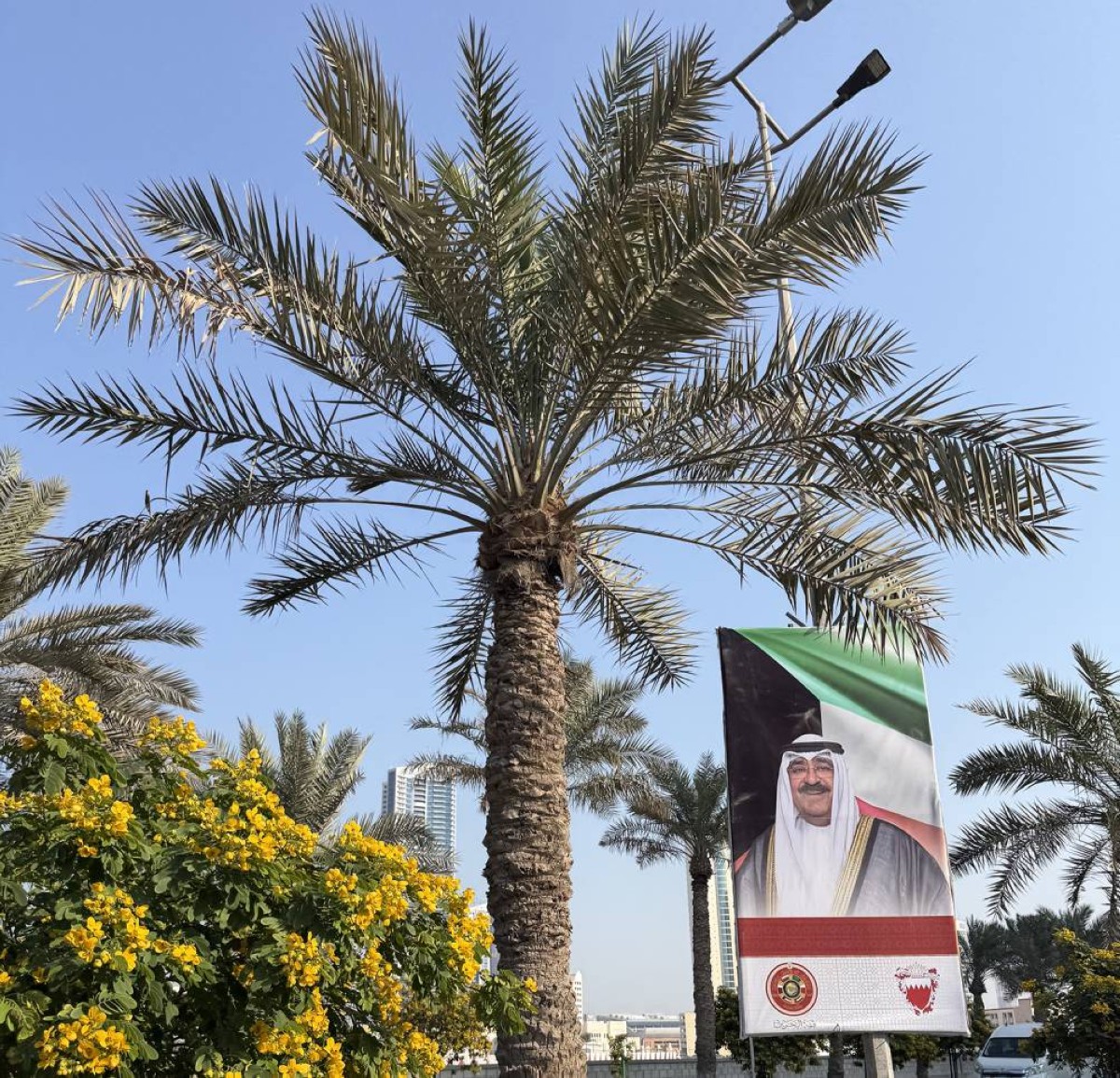
KUWAIT: GCC Secretary General Jasem Al-Budaiwi said on Tuesday the bloc is intensifying joint action on security, political and economic fronts to reinforce regional stability, ahead of the GCC Summit on Wednesday. HH the Amir Sheikh Meshal Al-Ahmad Al-Jaber Al-Sabah and his accompanying delegation will depart on Wednesday for Bahrain to chair the Kuwaiti delegation at the 46th regular session of the Supreme Council of the Gulf Cooperation Council.
Al-Budaiwi said a new committee will implement the 2026-30 security strategy against money laundering, built on legislation, joint operations, technology, international cooperation and capacity building. A parallel body coordinates anti-terrorism efforts, while the unified GCC traffic system has helped reduce accidents.
Al-Budaiwi said the GCC Summit in Bahrain comes amid “critical” regional conditions, with leaders to discuss Gaza, the Iranian nuclear file and maritime security. He reaffirmed Gulf commitment to sovereignty, peaceful conflict resolution and a comprehensive solution for the Palestinian cause based on the Arab Peace Initiative and the two-state formula. He highlighted recent GCC missions to Syria and Lebanon to express solidarity, support political and economic stabilization and push for reforms while countering terrorism and drug smuggling. On Iran, he stressed the need for constructive negotiations that include GCC concerns.
Economically, Al-Budaiwi said the GCC is accelerating integration through major projects, chief among them the regional railroad expected to open in 2030. He also outlined the “one-stop” travel system that will allow Gulf citizens to move between member states without immigration checks. He noted strong progress on economic diversification, with non-oil sectors contributing 76 percent of GDP in 2024, supported by tourism, logistics, technology and major renewable energy projects. Negotiations continue on several free trade agreements.
Al-Budaiwi said Gulf states have achieved high compliance with UN development goals and are prioritizing youth empowerment, entrepreneurship and human capital development, alongside rapid improvements in health, social services and sports infrastructure. – KUNA
