

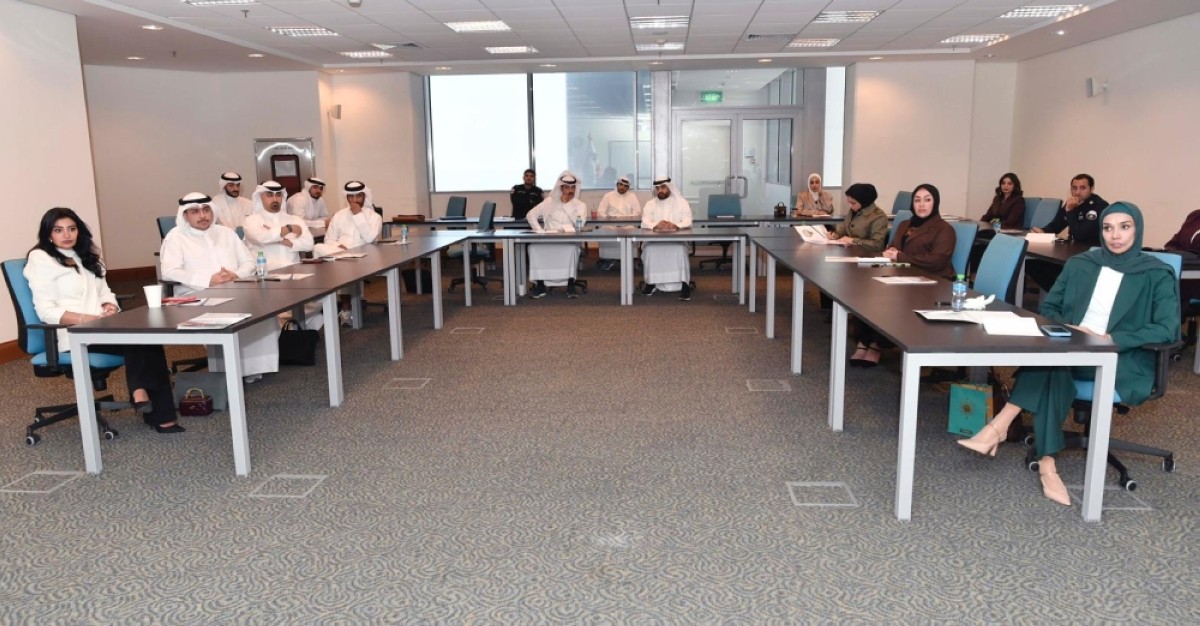
KUWAIT: The Vice Chairman of the National Standing Committee for International Humanitarian Law, Counselor Abdulrahman Al-Muhanna, affirmed the Committee’s commitment to developing national cadres capable of training government employees on international humanitarian law (IHL) and building sustainable capacity to promote compliance with international obligations. Al-Muhanna made the remarks to Kuwait News Agency (KUNA) on Thursday following the conclusion of the second phase of a training program organized by the Committee in collaboration with the regional delegation of the International Committee of the Red Cross (ICRC), the Ministry of Foreign Affairs’ Human Rights Affairs Department, and the Kuwait Institute for Judicial and Legal Studies.

The program, entitled “Preparing a Certified National Trainer in International Humanitarian Law,” aims to strengthen institutional knowledge and ensure the availability of qualified national trainers. He stressed that preparing certified national trainers is essential to enhancing the state’s ability to systematically disseminate IHL principles across government agencies and ensure that personnel are equipped to provide specialized training as needed. Al-Muhanna emphasized the importance of establishing a unified understanding of Kuwait’s international obligations and developing context-appropriate training programs that prepare government entities to respond to conflict and emergency situations in line with international standards.
Al-Muhanna explained that the first phase of the program focused on fundamental IHL principles, including the protection of civilians and civilian objects, the rules governing international and non-international armed conflict, accountability for violations, and mechanisms for implementing the law. The second phase concentrated on evaluating research and presentations, refining training methodologies, developing instructional materials and conducting mock trials.

The program featured national experts in IHL, including judges, advisors, and professors of international criminal law, alongside legal specialists from the ICRC regional delegation. Participating entities included the Ministries of Justice, Foreign Affairs, Interior, Defense, Health, and Information, as well as the Fatwa and Legislation Department and the Kuwait Red Crescent Society. Al-Muhanna extended sincere appreciation to the ICRC regional delegation, the Human Rights Department at the Ministry of Foreign Affairs, and the Kuwait Institute for Judicial and Legal Studies for their cooperation in ensuring the program’s success.
He highlighted the Committee’s ongoing aspiration to prepare certified national trainers to raise institutional awareness of IHL, integrate its rules into national training and policies, and enhance practical adherence to international humanitarian standards. The five-day program, held from November 23 to 27 at the Kuwait Institute for Judicial and Legal Studies, forms part of broader efforts to consolidate IHL principles, advance the objectives of related international conventions and treaties, strengthen international cooperation, and promote awareness of humanitarian law at the national level. — KUNA
