

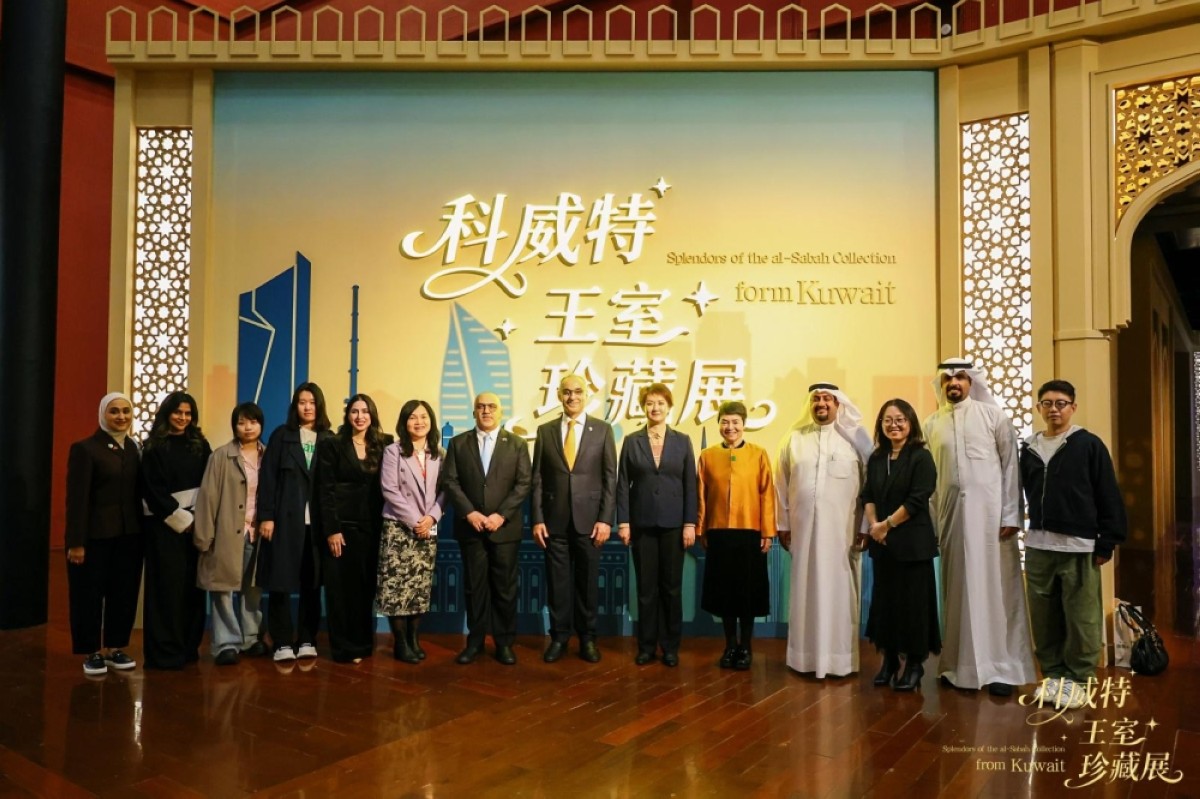
GUANGZHOU: Kuwait’s Dar Al-Athar Al-Islamiyyah opened its second exhibition in China on December 9, presenting “Splendors of the Al-Sabah Collection from Kuwait” at Guangdong Museum. The event is part of celebrations marking Kuwait as the Arab Capital of Culture and Media 2025. The exhibition was inaugurated by Dr Mohammad Al-Jassar, Secretary-General of the National Council for Culture, Arts and Letters (NCCAL), in the presence of a Kuwaiti delegation led by Consul General Abdullah Turki Al-Turki. “The opening of this exhibition reflects Kuwait’s cultural presence and its role as the Arab Capital of Culture and Media 2025,” Dr Al-Jassar said. “We highly value the efforts of Sheikha Hussa Sabah Al-Salem Al-Sabah in continuing the vision of Dar Al-Athar Al-Islamiyyah established by the late Sheikh Nasser Sabah Al-Ahmad Al-Sabah. This exhibition strengthens cultural dialogue and expands cooperation between Kuwait and friendly nations.”
The exhibition features 133 rare artefacts from the Al-Sabah Collection, spanning a broad historical timeline from the third millennium BCE to the early 7th century CE. The pieces reflect the civilizations of the Arabian Peninsula, Iran, India, Central Asia and Egypt. Highlights include jewelry, vessels, statues, and works in gold and silver inlaid with gemstones.
The opening included a 90-minute program with a sand art performance, speeches by Chinese officials, a musical performance by the Xinghai Conservatory ensemble, and a guided tour of the exhibits. A highlight of the exhibition is a large bronze goat from Mesopotamia, noted for its symbolic links to fertility and religious rituals. Hundreds of other rare items are also on display. The exhibition marks a milestone in Kuwait-China cultural ties and reflects Kuwait’s commitment to promoting its heritage abroad. It paves the way for more collaborations and exchanges between the two countries. Prior to the Guangdong showcase, Kuwait inaugurated the “Blossoms and Blades” exhibition in Shenzhen on December 6. The event featured 143 masterpieces from the Al-Sabah Collection, highlighting Mughal and Indian art from the 16th to 19th centuries.
