

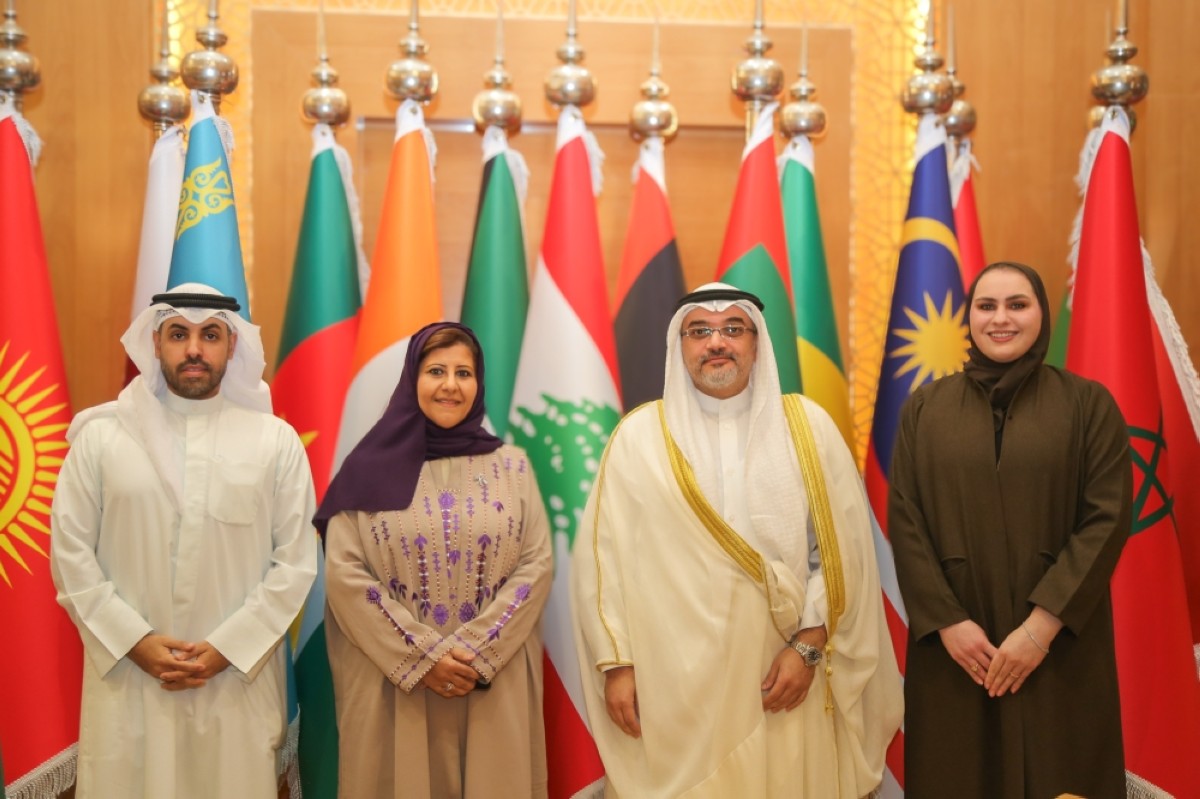
JEDDAH: The 26th regular session of the Independent Permanent Human Rights Commission of the Organization of Islamic Cooperation (OIC) commenced on Sunday at the OIC headquarters in Jeddah, with the participation of Kuwait’s Assistant Foreign Minister for Human Rights, Ambassador Sheikha Jawaher Ibrahim Al-Duaij Al-Sabah. In his opening remarks, OIC Assistant Secretary-General for Political Affairs, Ambassador Yousef Al-Dubaie, highlighted that OIC member states are home to approximately 350.8 million young people, representing about 30 percent of the world’s youth population.
He noted that this demographic growth presents both significant opportunities and challenges in achieving social and economic development and prosperity. “Young people are not only our greatest asset but also our most powerful agents of change,” he said, adding that rapid technological advancements, economic uncertainty, social transformations, and environmental challenges create both unprecedented opportunities and complex hurdles for youth.
The OIC reaffirmed its commitment to empowering young people through education, innovation, entrepreneurship, and inclusive participation, ensuring they are equipped to build a future grounded in justice, prosperity and shared human dignity. The organization emphasized the need for a structured action plan and monitoring mechanism for youth empowerment strategies, including clear timelines, budget allocations and key performance indicators.

JEDDAH: Officials attend the 26th regular session of the Independent Permanent Human Rights Commission of the Organization of Islamic Cooperation (OIC) on Sunday at the OIC headquarters in Jeddah, with the participation of Kuwait’s Assistant Foreign Minister for Human Rights, Ambassador Sheikha Jawaher Ibrahim Al-Duaij Al-Sabah.
The Commission stressed the importance of strengthening cooperation with the UN Inter-Agency Network on Youth Development and the UN Development Programme, while establishing collaborative frameworks among stakeholders to enhance policy coordination in youth affairs. Dr Hadi Al-Yami, Executive Director of the Independent Permanent Human Rights Commission, said the Commission has bolstered its human resources with specialized personnel and has coordinated with the OIC General Secretariat to enhance digital infrastructure, cybersecurity and digital transformation efforts, thereby improving operational efficiency and communication with member states.
He noted that the session’s theme focuses on technology, inclusion, governance, youth participation, skills development, and standard protection frameworks in line with regional and international human rights standards. Sheikha Jawaher Al-Sabah is heading Kuwait’s delegation, which also includes the Consul General in Jeddah and Permanent Representative to the OIC, Yousef Al-Tunaib; Advisor at the Kuwaiti Mission to the OIC, Turki Al-Daihani; and Diplomatic Attaché at the Ministry of Foreign Affairs, Zainab Mansouri.
The session will continue until next Thursday, with participation from OIC member states, observer states, national human rights institutions, and experts from regional and international organizations. The first day featured a discussion on “Youth Development: Opportunities and Challenges from a Human Rights Perspective,” examining challenges and identifying effective measures to empower young people as drivers of positive change, innovation, and sustainable development across OIC member states.
The second day will include a high-level dialogue on youth engagement in humanitarian efforts, peacebuilding and post-conflict development. From December 15 to 18, the Commission will hold closed meetings of its working groups to discuss agenda items in detail. The session will conclude with the adoption of a comprehensive declaration summarizing the outcomes, serving as a reference for OIC member states and international partners in guiding policies on youth empowerment. — KUNA
