

MUMBAI: Kuwait’s Al-Sabah Archaeological Collection is showcasing 11 rare artefacts at the international exhibition Networks of the Past: A Study Gallery of India and the Ancient World, which opened in Mumbai on Dec 12. The exhibition, hosted by the Chhatrapati Shivaji Maharaj Vastu Sangrahalaya (CSMVS), highlights cultural interconnectedness across ancient civilizations, from the Indus Valley to Greece, Egypt and China.
Kuwait was represented by Dr Mohammad Al-Jassar, Secretary General of the National Council for Culture, Arts and Letters (NCCAL), on behalf of the Minister of Information and Culture and Minister of State for Youth Affairs, Abdulrahman Al-Mutairi. The opening was also attended by Kuwait’s Consul General in Mumbai, Emad Abdulaziz Al-Kharaz, along with Salam Kaoukji, curator and director of the Al-Sabah Archaeological Collection, and an official delegation from Dar Al-Athar Al-Islamiyyah.

(From left) A Sasanian bronze cylindrical seal from the fifth century CE, a silver rhyton from 100 BCE–60 CE featuring a gilded caracal cat protome, another silver rhyton, dating to the 5th–4th century BCE from Iran or Anatolia and a carnelian intaglio from the 3rd–4th century CE featuring a Sasanian king’s portrait (bottom), are part of Kuwait’s contribution to the exhibition.

The Chhatrapati Shivaji Maharaj Vastu Sangrahalaya

MUMBAI: Kuwaiti officials, including NCCAL’s Dr Mohammed Al-Jassar, attend the opening of the exhibition Networks of the Past: A Study Gallery of India and the Ancient World.

A gold and carnelian bracelet piece from Iran (bottom), dating to 600–300 BCE, is part of the Al-Sabah Collection.
Through 250 archeological objects, the gallery traces India’s connections with Mesopotamia, Egypt, Greece, Rome, Persia and China through trade, art, ideas and belief systems. They present a tangible map of interaction, showing that ancient civilizations evolved through constant dialogue and exchange — the very essence of human progress.
Kuwait’s participation comes as part of a global network of museums, including the British Museum in London, Staatliche Museen zu Berlin in Berlin, Museum Rietberg in Zurich and the Benaki Museum in Athens. The collaboration spanned more than four years to bring the exhibition to its current form.
Sheikha Hussa Sabah Al-Salem Al-Sabah, Director General of Dar Al-Athar Al-Islamiyyah and co-owner of the Al-Sabah Collection, emphasized the importance of Kuwait’s global cultural presence. She framed it as a continuation of her late husband Sheikh Nasser Sabah Al-Ahmad Al-Sabah’s vision to share art, history and human heritage with the world.
In a statement, Dr Al-Jassar said NCCAL was proud to support Dar Al-Athar Al-Islamiyyah, which serves as an ambassador of Kuwaiti cultural diplomacy worldwide. “We also value the support of the Minister of Information and Culture, Abdulrahman Al-Mutairi, in preserving this heritage, which reflects Kuwait’s cultural identity and human legacy. The Al-Sabah Archaeological Collection’s participation has been met with strong international recognition for its artistic and historical significance,” he added.
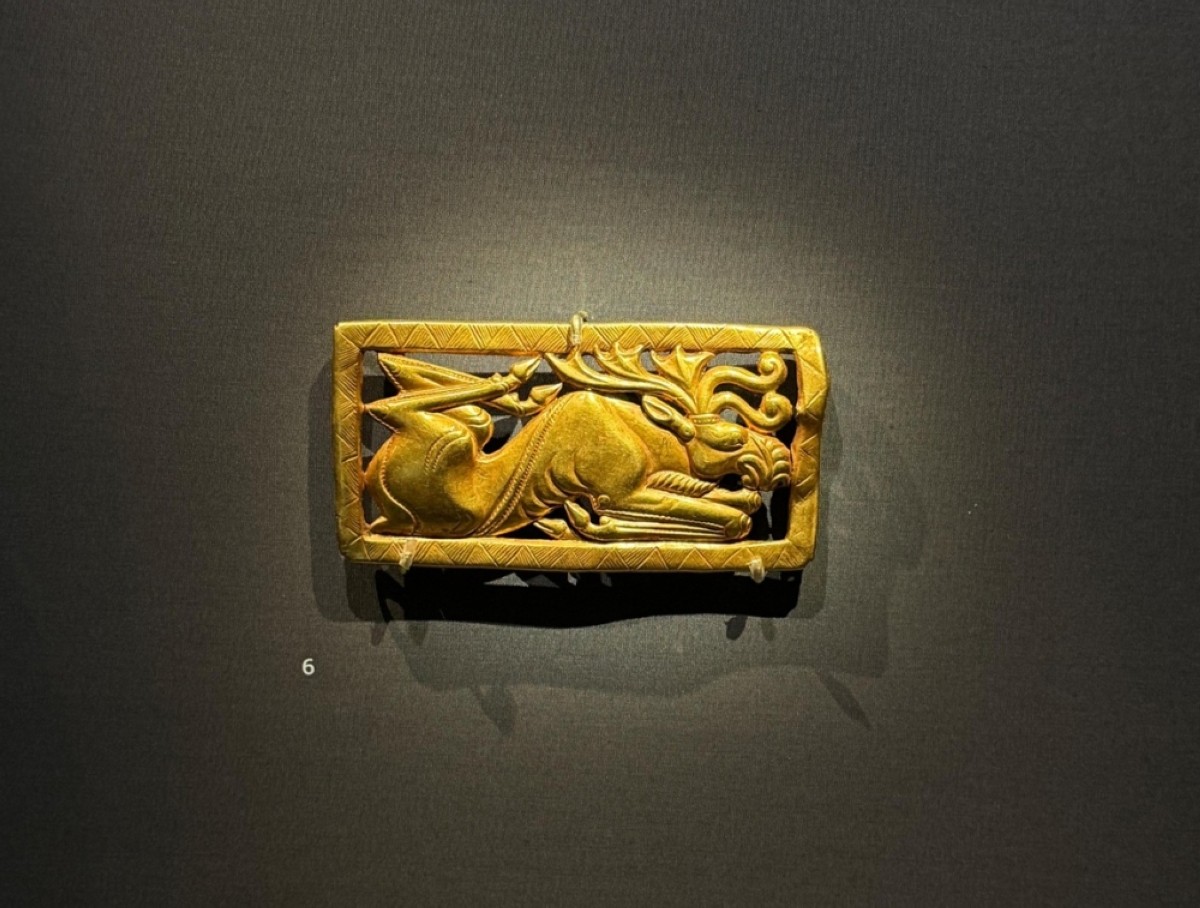
Dr Al-Jassar said he appreciated Dar Al-Athar Al-Islamiyyah “for making these rare treasures available to be shared with the world’s leading museums,” he said. The Kuwaiti contribution includes a gold belt-strap fitting from the Oxus Valley civilization dating to 400–300 BCE. It also includes a silver and gold dish, decorated with repoussé work, dating to around 400–200 BCE and originates from the northern Indian subcontinent and glass vessels from eastern Iran spanning the fourth to third centuries BC. The exhibition will run until December 2028.
