

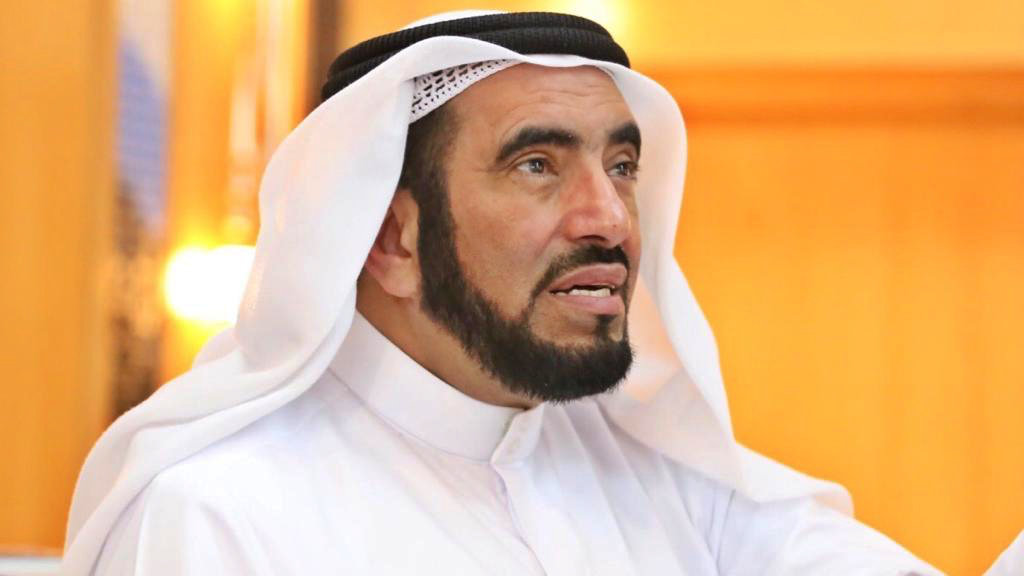
Tareq al-Suwaidan was born in Kuwait in 1953, a decade before the modern state formally emerged.
His roots in the country predate its political formation, and his identity has long been intertwined with its social and cultural fabric.
The decision this week to revoke his citizenship severs a bond older than the state itself, one built on knowledge, civic contribution and public engagement.
For decades, Suwaidan has been a prominent figure in the Arab and Muslim intellectual sphere.
His books, lectures and leadership programmes have influenced students, professionals and thinkers across the region. Through this work, he has consistently promoted a vision of ethical development and what he describes as moderate Islamic thought, grounded in understanding, civic responsibility and dialogue.
New MEE newsletter: Jerusalem Dispatch
Sign up to get the latest insights and analysis on
Israel-Palestine, alongside Turkey Unpacked and other MEE newsletters
His influence has extended well beyond Kuwait’s borders, contributing to wider conversations on education, leadership and public ethics.
He never sought official recognition. The dissemination of ideas, rather than political influence or institutional authority, was his primary pursuit.
Yet today, a man whose life and work are deeply embedded in Kuwait’s cultural landscape has been stripped of his nationality without publicly available evidence of wrongdoing or hostility.
For the sake of fairness and civic integrity, this decision merits urgent reconsideration.
Speech and punishment
Beyond his intellectual contributions, Suwaidan has also positioned himself as an advocate for justice-related causes. He has spoken publicly about the rights of occupied peoples and about political and humanitarian struggles that many others have approached more cautiously.
Even so, his language has generally remained measured. He has avoided personal attacks or verbal escalation, opting instead for appeals rooted in ethics, principle and public responsibility.
It raises serious moral and legal questions about the state’s treatment of its own citizens and about the boundaries of permissible expression
The revocation of his citizenship, therefore, represents more than a bureaucratic act. It raises serious moral and legal questions about the state’s treatment of its own citizens and about the boundaries of permissible expression.
Observers outside Kuwait have noted the contrast between this action and international norms. In many European and North American jurisdictions, citizenship revocation is treated as an extraordinary measure, typically tied to clearly defined legal violations and subject to extensive scrutiny.
In this case, a person born in Kuwait has been stripped of his national rights without an apparent justification. This disparity has prompted wider concern about due process, legal protections and civil liberties.
A dangerous precedent
This moment calls for principled engagement from international human rights organisations. Citizenship is not merely a legal classification. It is the basis of identity, security and belonging.
Using it as a punitive instrument against expression or intellectual positions undermines the values states often claim to uphold. Organisations concerned with freedom of thought, equality and rights should urge transparency and accountability, and call for a reversal of the decision.
Remaining silent risks normalising a precedent with far-reaching consequences.

Are Arab dissidents facing a new wave of repression?
Read More »
Suwaidan’s ideas and public work cannot be erased by administrative decree. His books, lectures and writings, centred on ethical leadership, personal development and social responsibility, continue to resonate across the Arab and Muslim world.
His work has benefited not only Kuwait but also international audiences.
Yet the action taken against him serves as a reminder that even prominent public figures can be rendered vulnerable when legal protections weaken, and principles are set aside.
Restoring his nationality would reaffirm the simple principle that knowledge, integrity and public engagement are assets to a society, not grounds for exclusion.
The views expressed in this article belong to the author and do not necessarily reflect the editorial policy of Middle East Eye.
