

Egyptian-born Anglo-American filmmaker Lotfy Nathan scored a major hit at the 2022 Cannes Film Festival with his Tunisia-set social thriller Harka.
The film garnered rave reviews and earned a best actor award for its French-Tunisian star, Adam Bessa.
Like many Middle Eastern directors before him, Nathan was subsequently lured to Hollywood to take on the ever-elusive American genre blockbuster.
The result was The Carpenter’s Son, a historical horror film penned by Nathan and starring Nicolas Cage and singer FKA Twigs.
If you, dear reader, have never heard of the film, do not fret; you’re not the only one.
New MEE newsletter: Jerusalem Dispatch
Sign up to get the latest insights and analysis on
Israel-Palestine, alongside Turkey Unpacked and other MEE newsletters
With a reported budget of $10m, The Carpenter’s Son – released last month – grossed just $143,607 worldwide.
It currently has a score of 4.2 on IMDb and sits at an uninspiring 31 percent on Rotten Tomatoes at the time of publication.
Nathan’s Hollywood debut is yet another example of a catastrophic attempt by a Middle Eastern filmmaker to break into Hollywood.
Over the past 25 years, Tinseltown has given considerable opportunities to Middle Eastern directors, only for those efforts to flounder miserably.
And while some filmmakers, such as Mohamed Diab, Tarik Saleh, and Ali Abbasi, managed to find success in television with Marvel’s Moon Knight, Westworld, and The Last of Us, respectively, the vast majority failed to replicate their earlier achievements in American cinema.

Moon Knight versus Ms Marvel: What lies beyond representation?
Read More »
There are a number of factors at play: a mismatch of artistic sensibilities and vision; the rigid control exerted by studio executives over the final product; and a broader inefficacy to crack and integrate into the American film machine.
Asian, Latin American and European filmmakers have shrewdly worked to infuse their Hollywood projects with their own stylistic signatures while finding elements in the material that align with their thematic preoccupations.
That has not been the case with Middle Eastern filmmakers, whose Hollywood output has remained anonymous and unremarkable.
A Middle Eastern talent is bound to defy the pattern sooner or later, but as long as directors continue to compromise their artistic integrity while failing to shape studio projects in their own image, the Hollywood enigma will remain unsolved.
Attempting to compile a list of the five best films by Middle Eastern filmmakers in Hollywood proved difficult; a top 10 was virtually impossible.
We therefore opted instead to present 10 of the worst films directed by Middle Eastern filmmakers and to celebrate the disasters that ended numerous Hollywood careers prematurely.
Should you decide to do the unthinkable and watch any of the following titles, consider this your sole advisory: proceed with caution.
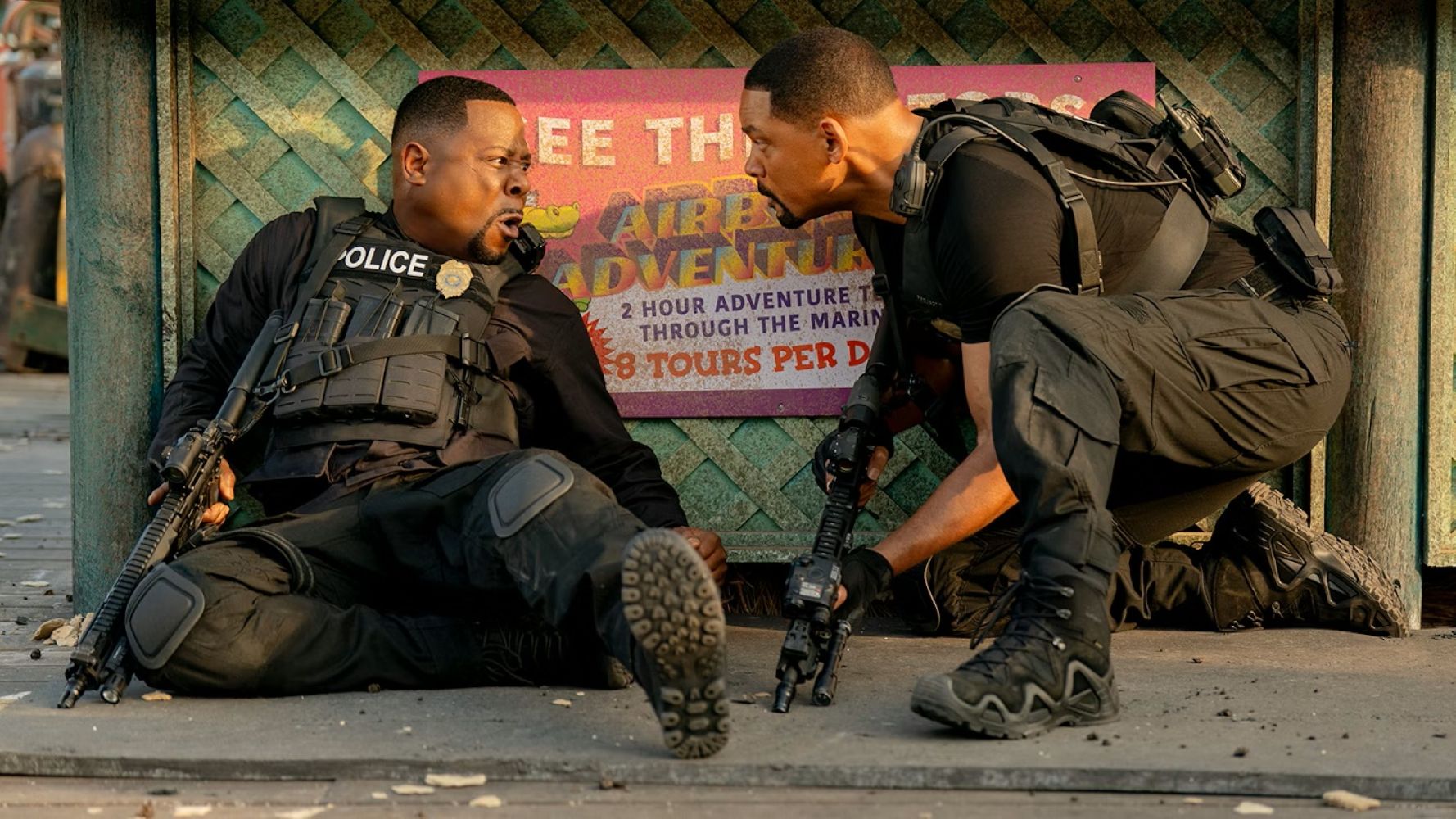
10) Bad Boys: Ride or Die (2024)
With a $404m cumulative worldwide gross, the second Hollywood outing by Belgian-Moroccan duo Adil el-Arbi and Bilall Fallah is anything but a commercial dud.
The fourth installment of the blockbuster action series has its admirers among fans and critics alike.
But this is a lazy, run-of-the-mill action film, overly reliant on nostalgia and fronted by two leads just going through the motions.
Will Smith and Martin Lawrence reprise their roles as Miami police officers Mike Lowrey and Marcus Burnett, who reunite for another low-stakes adventure. This time, they work to clear the name of their late captain, who has been accused of involvement with drug cartels.
Arbi and Fallah made a name for themselves with a series of gritty action thrillers centred on disenfranchised immigrants living on the margins of Europe.
The social commentary that defined their best work, such as Black, Gangsta, Rebel, is nowhere to be found in the two lifeless Bad Boys instalments they directed, replaced instead by hollow spectacle sporadically redeemed by kinetic action choreography.
9) The Contractor (2022)
For the record, this writer is a fan and supporter of the works of Swedish–Egyptian writer-director Tarik Saleh.
His Egyptian noir trilogy (The Nile Hilton Incident, Boy from Heaven, Eagles of the Republic) explores the relationship between various institutions and the nation’s security apparatus.
The films stand as the most daring and valiantly critical fictional exposes of Abdel Fattah el-Sisi’s Egypt.
Saleh’s first full foray into Hollywood was nowhere near as commanding or weighty as his Egyptian films.
A bland Chris Pine plays a decorated Special Forces sergeant who is discharged from the military for using illegal pain drugs, resulting in the loss of his benefits and forcing him to work as a contractor for a private military company.
When a mission goes wrong, he finds himself on the run as a web of corruption begins to unravel.
An intriguing and potentially engrossing thread about the depravity of American capitalism is drowned in a sea of cliched plotting and stereotypical characters, including, most unforgivably, a Middle Eastern scientist working for a terrorist organisation.
Tonal unevenness, humdrum action and anaemic storytelling are bundled into an exasperatingly formulaic picture torn between the director’s serious moral inquiries and the studio’s preference for empty frills.
8) Radioactive (2019)
Once upon a time, French-Iranian graphic novelist-turned-director Marjane Satrapi was an exciting filmmaker who emerged at the dawn of the new century.
Her autobiographical Persepolis (2002) remains one of the most groundbreaking animated films of the past 25 years.
Sadly though, the Oscar nominee has proven to be a one-trick pony with none of her subsequent efforts in the US or France managing to scale the heights set by her debut feature.
Starring Ryan Reynolds, the horror-comedy The Voices (2014) was her first substantial misstep, but it pales in comparison to Radioactive, the weakest entry in her post-Persepolis filmography.
The Amazon-produced biopic about pioneering Polish-French physicist and chemist Marie Curie is a stodgy period drama.
It chronicles her struggle to secure support from sceptical institutions for her research, before her scientific breakthroughs are finally recognised with a Nobel Prize.
Bizarre flash-forwards punctuate the narrative to illustrate the impact of her work on everything from the genesis of the atomic bomb to cancer treatment.
It is an insufferably blunt, didactic device that clashes with Satrapi’s signature stylisation.
Its feminism is superficial; its scientism is simplistic. Besides Rosamund Pike’s imposing performance, Radioactive is little more than a TV special made by an artist with nothing coherent or provocative to say.
7) The Mountain Between Us (2017)
After scoring a second Oscar nomination with 2013’s thriller Omar, Palestinian filmmaker Hany Abu-Assad of Paradise Now fame was given another shot by Hollywood.
The outcome was a romantic survival tale that follows Idris Elba and Kate Winslet as they struggle to reach safety after a plane crash.
There’s nothing particularly vexing about Abu-Assad’s second Hollywood production – and perhaps, that’s the problem.
The Mountain Between Us is too middle-of-the-road to leave a lasting impression of any kind.
It is a film devoid of any formal, narrative or philosophical point of view.
Winslet and Elba have zero chemistry, and the film sorely lacks the grit and emotionality of Abu-Assad’s vastly superior Palestinian films.
Peppered with wooden, insular dialogue such as “I’m a photojournalist; I see things” and “We’re going to make it… together,” The Mountain Between Us is as frigid as its snowy backdrop.
Abu-Assad’s work is a forgettable action melodrama that wastes the talents of everyone involved.
6) Wounds (2019)
British-Iranian filmmaker Babak Anvari made a massive splash with his 2016 debut Under the Shadow, a psychological horror set during the Iran-Iraq War.
His much-anticipated follow-up, however, made headlines for all the wrong reasons.
Disgraced star Armie Hammer plays a New Orleans bartender whose life spirals out of control after he picks up a cell phone left behind by a group of shady-looking teenagers.
Things take a turn for the worse when the phone begins transmitting disturbing messages and videos.
Sporting a maddeningly passive protagonist whose descent into madness elicits more derision than sympathy, Wounds attempts to weave a heavy-handed allegory about moral decadence, spiritual desolation, and the venomous force of technology within a moody supernatural horror devoid of either thrills or thought.
A shoddy mishmash of horror tropes amounting to nothing, Wounds is all style and no substance – a self-serious and ultimately ridiculous genre piece that believes itself far more intelligent than it actually is.
5) Mary Shelley (2017)
Haifaa al-Mansour made history when she became the first Saudi female filmmaker to direct a full-length feature.
Her beloved debut Wadjda (2012) remains one of the highest-grossing Arab films at the North American box office.
Hot on the heels of Wadjda’s success, Mansour was hired to direct a biopic by the iconic author of Frankenstein. The film charts the formative years of the young writer, played by Elle Fanning, and her budding romance with poet Percy Shelley, which partially inspired the creation of her legendary novel.
Mansour, however, never dares to challenge the constraints of the biopic, delivering a stiff, by-the-numbers, excessively polite picture that neither penetrates the psyche of its elusive protagonist nor offers an incisive or fresh perspective on the creative process.
With its sluggish pacing, endless dialogue-driven exposition, and highly conventional plotting thoroughly devoid of invention, Mary Shelley becomes an aggravating test of patience – a film you desperately want to end by the halfway mark.
This is the kind of autopilot filmmaking Mansour has mastered after Wadjda.
4) Kings (2017)
Two years after scoring an accidental hit with her overrated coming-of-age debut Mustang, Turkish-French filmmaker Deniz Gamze Erguven was heralded as an exciting emerging talent.
As a result of that initial success, Erguven swiftly had her sophomore feature greenlit by several indie houses and French financiers.
The result was nothing short of a disaster. Daniel Craig, at the peak of his James Bond popularity, and Halle Berry play star-crossed lovers caught in the civil unrest of the 1992 Los Angeles riots.
Erguven approaches one of the most monumental events in California’s modern history with a stunning degree of glibness and naivete, treating the racial injustice and class disparities exposed by the riots without a hint of nuance.
Kings is the work of an outsider looking in: the exoticising gaze that made Mustang such an appealing proposition for western viewers remains front and centre in her imprudent depiction of race and class.
Nothing in the film works: the structurally disjointed narrative, the paper-thin characters, the jarring tonal swerves, and, most abominably, the flat representation of Los Angeles.
There is also one unintentionally hilarious sex dream that feels as though it has been lifted from an entirely different film.
With a budget of $11.8m, Kings grossed a paltry $910,269 worldwide. Erguven, mercifully, has not directed another film since.
3) The Courier (2012)
Hany Abu-Assad holds the undignified distinction of being the only filmmaker with two entries on this list.
His first Hollywood production was hailed as a milestone marking the arrival of Middle Eastern filmmakers in Tinseltown.
After years of delays, its theatrical release was scrapped, and it went straight to DVD – back in the golden days when home video was a lucrative business.
It is not difficult to see why the film was shoved aside.
The Walking Dead and Watchmen star Jeffrey Dean Morgan headlines this wannabe action thriller about a professional bagman hired to deliver a briefcase of unknown contents to a legendary hitman named Evil Sivle.
Naturally, customarily, unfortunately, things do not go smoothly.
Co-starring Mickey Rourke and Til Schweiger, The Courier is essentially a pale imitation of The Transporter, minus the sensational action set pieces, humour, or Jason Statham’s charisma.
Everyone is sleepwalking their way through a film that seems bored with itself – a zombie of a movie marching to oblivion.
Low-octane action, enervated performances, hackneyed plotting and ugly visuals compound a film that already knows it is terrible – the kind of mechanical exercise an AI could effortlessly top.
To his credit, Abu-Assad disowned the film, describing its making as “a painful experience”.
“Even if you are a good storyteller, that doesn’t mean you can make something from nothing,” he later commented in an interview with Slant Magazine.
2) The Carpenter’s Son (2025)
Only two years ago, Lotfy Nathan was being touted as the new shining star of Arab cinema.
Harka was in my top 10 Middle Eastern films of 2022, and there was, admittedly, considerable excitement about his unlikely collaboration with Nicolas Cage.
The legendary Hollywood actor was the force behind three of the finest American horrors of recent years: Mandy (2018), Color Out of Space (2019), and last year’s chart-topping smash Longlegs.
Cage plays the carpenter Joseph, whose unnamed boy – a young, oblivious Jesus – is struggling to come to terms with his identity, vocation, and supernatural powers during their time in Roman-era Egypt.
A theological probing in the vein of The Last Temptation of Christ, The Carpenter’s Son is decidedly not.
Part biblical drama, part coming-of-age story, and part supernatural horror, Nathan never manages to fuse these gratingly dissonant strands into a coherent treatise about anything.
The 10 best Middle Eastern and North African films of 2022
Read More »
Cage’s hysterical Joseph obliterates any potential for believability or immersion in a narrative that cannot decide what it is or what it wants to achieve.
It is neither serious enough to offer food for thought nor campy enough to qualify as genre-bending entertainment – although the stormy fist fight with Satan comes close to the latter.
The Carpenter’s Son thinks it has something worthwhile and profound to say about faith, destiny and the burden of being human.
What we end up with is a shambolic hodgepodge of half-baked ideas, written by a filmmaker with the philosophical convictions of a fifth grader.
1) Night Walk (2019)
As unwatchable as most films on this list are, none – not even The Carpenter’s Son – can hold a candle to this assault of a film.
Distributed by Lionsgate for reasons unknown, the debut feature of novice Moroccan writer-director Aziz Tazi revolves around Frank, played by Sean Stone of The Doors and JFK fame, and son of director Oliver Stone.
Stone’s American bachelor falls in love with a Muslim woman, Sarah (Sarah Alami), and travels with her to her Arab home country.
A skirmish with a crooked police officer ends with Sarah’s accidental killing – a crime the officer promptly pins on Frank.
After escaping back to the US, where, in Tazi’s America, the particularities of the different states simply do not exist, an equally crooked judge, Eric Roberts, hands him a prison sentence.
There, he is assaulted, befriends a Black Muslim who inspires him to convert to Islam, and begins devising a plan to avenge Sarah and clear his name.
What is Night Walk supposed to be? What is it trying to investigate? Spiritual awakening? Clash of civilizations? Judicial corruption? Male bonding? No one knows.
There are flashbacks, references to Iraq and Afghanistan, terrorism, aborted romances, drug use – subplots upon subplots pile up to conjure a mountain of grotesqueness.
Illogical action unfolds abruptly, the preachiness is relentless, and the political worldview is infantile.
The shrieking melodrama of Night Walk makes 1980s Egyptian soap operas look restrained by comparison.
If the storylines sound far-fetched and overwrought, the abysmal performances, amateurish direction, awkward staging, robotic cinematography, and subhuman editing give Night Walk a tint of unintentional surrealism.
Oscar-nominee Mickey Rourke lends his diminishing talents to this straight-to-video production, which never received a theatrical release.
Watching Night Walk has the same effect as lowbrow reality TV: it is pure brain rot whose sheer horridness makes it perversely compulsive viewing.
